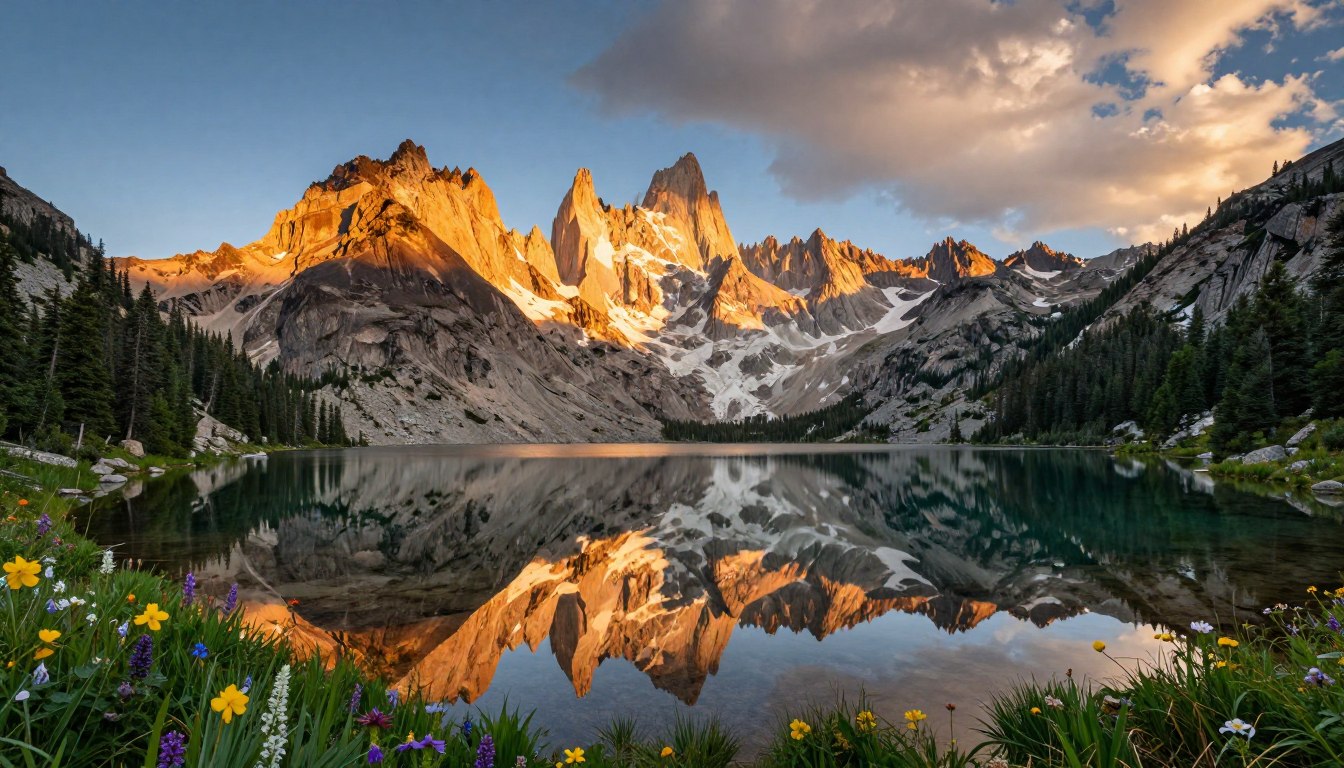
Across the vast expanse of the United States, 63 national parks preserve the country’s most breathtaking natural wonders. From granite monoliths piercing the sky to ancient forests cloaked in mist, from technicolor canyons carved over millennia to glaciers glowing blue in the midnight sun, these protected landscapes represent nature at its most spectacular.
For over a century, the National Park Service has safeguarded these treasures, ensuring that future generations can experience the same awe that struck early explorers. Today, more than 300 million visitors annually seek adventure, solitude, and connection with the natural world within these protected boundaries.
This comprehensive guide showcases the ten most stunning national parks in America, selected for their jaw-dropping scenery, diverse ecosystems, and unforgettable experiences. Whether you’re planning your first park visit or you’re a seasoned adventurer seeking your next destination, you’ll discover essential information about must-see attractions, premier hiking trails, and optimal visiting seasons for each remarkable landscape.
Grand Teton National Park: Towering Peaks and Pristine Lakes
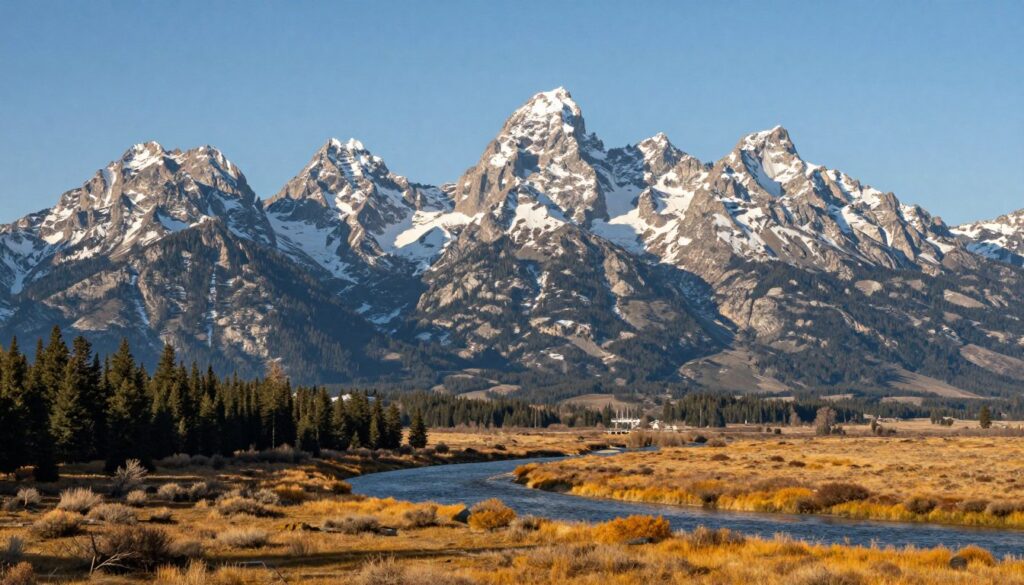
Rising abruptly from the flat expanse of Jackson Hole, the Teton Range creates one of America’s most dramatic mountain skylines. Without foothills to diminish their impact, these ancient peaks soar over 7,000 feet straight up from the valley floor, their granite faces glowing pink and gold at sunrise and sunset.
Grand Teton National Park protects 310,000 acres of stunning wilderness in northwestern Wyoming. The park’s crown jewel, the Grand Teton peak itself, reaches 13,775 feet and has challenged mountaineers since the first recorded ascent in 1898. Below the towering mountains, pristine alpine lakes mirror the peaks, while meadows burst with wildflowers each summer, attracting moose, elk, and the occasional grizzly bear.
Must-See Attractions in Grand Teton
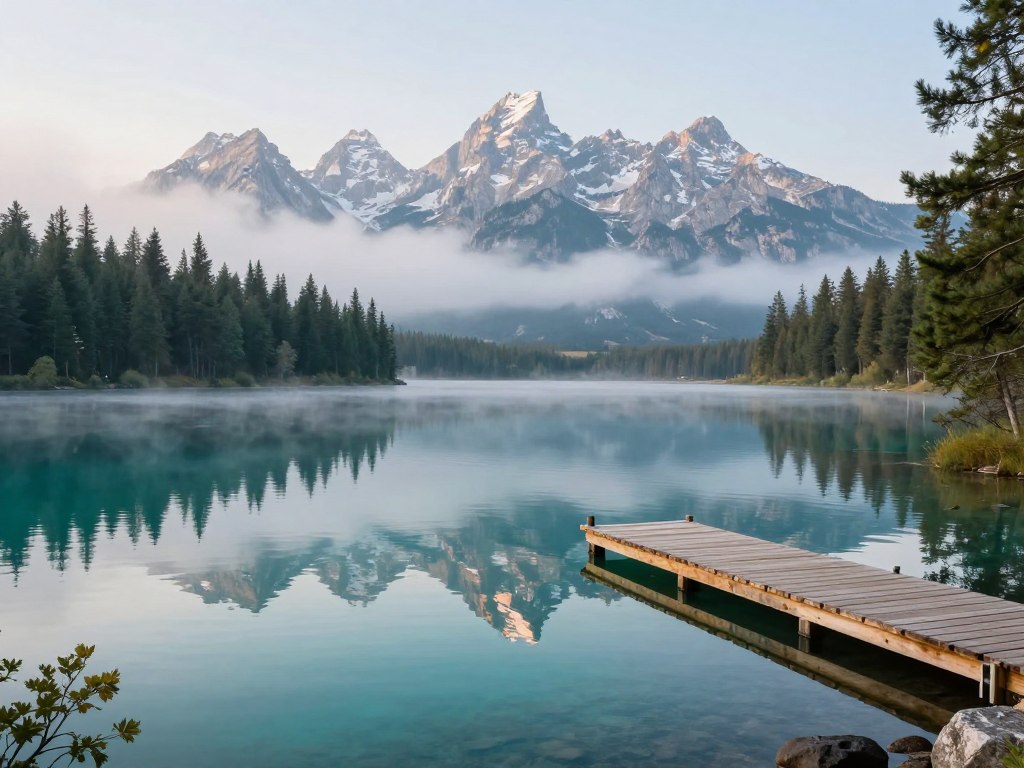
Jenny Lake stands as the park’s most iconic destination. This glacially-carved gem offers stunning mountain reflections and serves as the gateway to some of the park’s best hiking. Visitors can take a scenic boat shuttle across the lake or walk the shoreline trail for constantly changing perspectives of the Tetons.
Mormon Row Historic District provides an unexpected glimpse into homesteading history. The weathered barns and split-rail fences create perfect foreground interest for photographing the mountains. The T.A. Moulton Barn, built in the 1910s, ranks among the most photographed structures in America’s national parks.
Signal Mountain Summit Road winds 5 miles to a 7,720-foot viewpoint offering panoramic vistas across Jackson Lake to the Teton Range. On clear days, visitors can see as far as Yellowstone’s distant plateaus to the north.
Best Hiking Trails
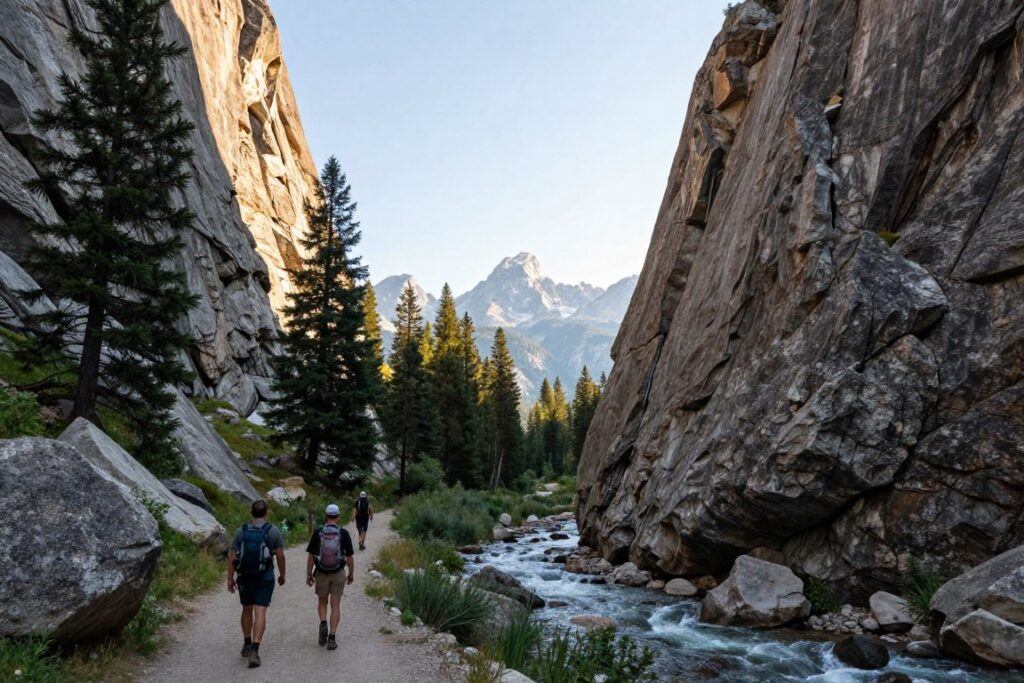
The Cascade Canyon Trail delivers spectacular alpine scenery without requiring technical climbing skills. Starting from Jenny Lake, this 9.1-mile round trip hike gains 1,100 feet as it follows a cascading creek between towering canyon walls. Hikers frequently spot moose browsing willows near the water and may encounter black bears in berry season.
For a shorter but equally rewarding experience, the Taggart Lake Trail covers 3.2 miles with only 400 feet of elevation gain. This accessible trail passes through areas scarred by the 1985 wildfire, now recovering with young aspens, and ends at a peaceful lake with mountain reflections.
Ideal Visiting Seasons
Summer months from July through September offer the most accessible hiking conditions with all park roads and trails open. Wildflowers peak in July, painting the meadows with lupine, Indian paintbrush, and balsamroot. However, this popularity brings crowds, especially around Jenny Lake and popular trailheads.
September through early October provides an excellent alternative with fewer visitors, comfortable temperatures, and the spectacular gold of turning aspens contrasting against evergreen forests. Fall also brings elk rutting season, when bull elk bugle challenges across the valley.
Winter transforms Grand Teton into a serene wonderland. While many facilities close, cross-country skiing and snowshoeing offer peaceful ways to experience the snow-draped landscape. The contrast of dark forests against white peaks creates stunning photographic opportunities.
Yosemite National Park: Granite Giants and Thundering Waterfalls
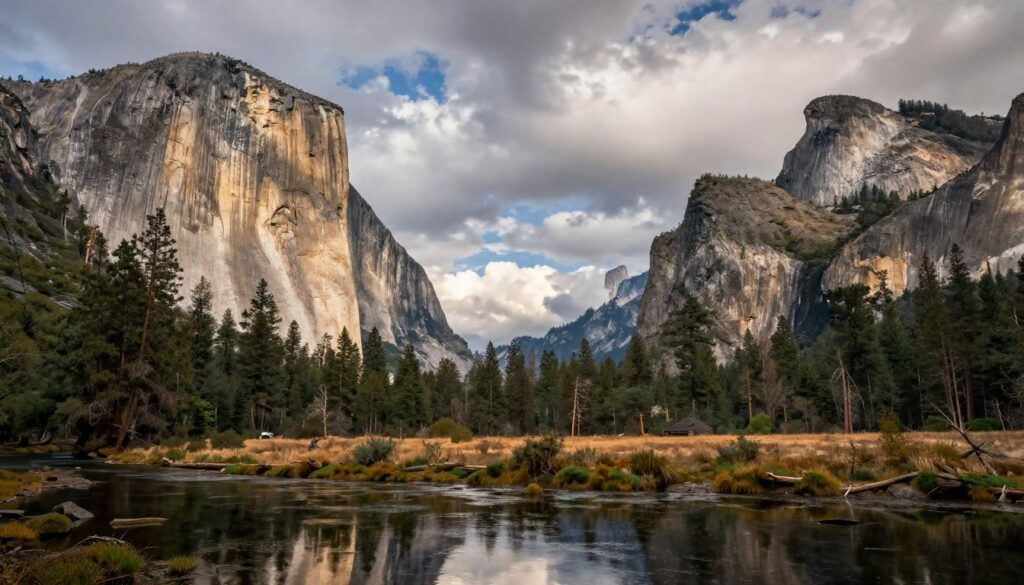
Few landscapes have captivated the American imagination like Yosemite Valley. This seven-mile-long canyon, carved by glaciers and deepened by the Merced River, showcases nature’s raw power and sublime beauty. Vertical granite walls soar up to 3,000 feet, waterfalls plunge from hanging valleys, and massive domes of naked rock catch the changing light throughout the day.
Established as a national park in 1890, Yosemite protects 748,000 acres of Sierra Nevada wilderness in central California. While Yosemite Valley receives the most attention, the park encompasses alpine meadows, giant sequoia groves, pristine wilderness, and over 750 miles of hiking trails. The park’s geological formations have made it a mecca for rock climbers worldwide, while photographers chase the perfect shot of its iconic features.
Must-See Attractions in Yosemite
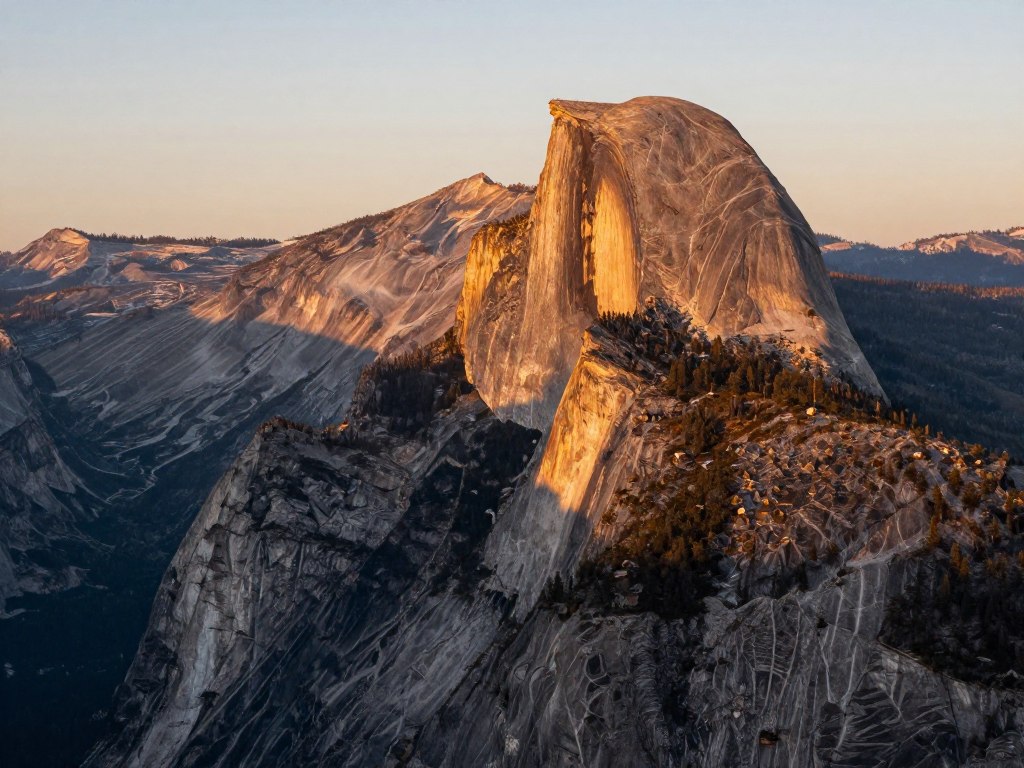
Half Dome stands as Yosemite’s most recognizable landmark. This massive granite formation rises 4,800 feet above the valley floor, its distinctive shape visible from countless viewpoints throughout the park. While hiking to its summit requires permits and technical cable climbing, admiring it from below remains unforgettable.
Yosemite Falls, North America’s tallest waterfall, drops 2,425 feet in three sections. Spring snowmelt transforms it into a thundering spectacle that generates mist visible across the valley. By late summer, the falls often reduce to a trickle or dry completely, making spring the prime viewing season.
Glacier Point offers the park’s most spectacular roadside viewpoint. From this 7,200-foot promontory, visitors gain a panoramic perspective of Yosemite Valley, Half Dome, and the High Sierra peaks. The view at sunset, when the granite faces glow orange and pink, draws crowds but rewards patient photographers.
Best Hiking Trails
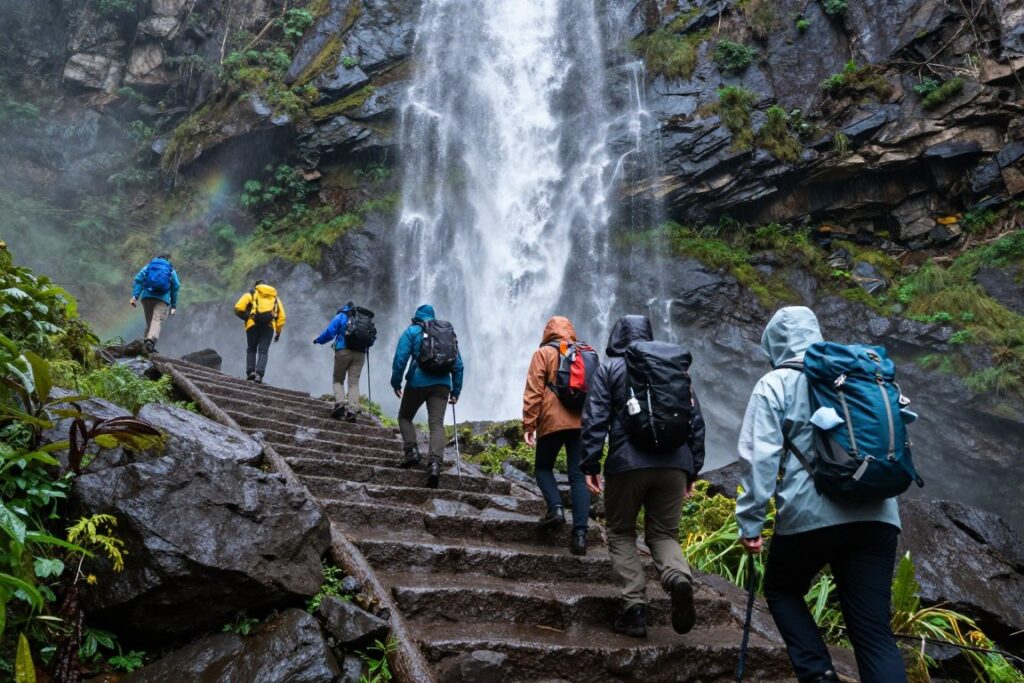
The Mist Trail to Vernal Fall ranks among Yosemite’s most popular hikes for good reason. This 5.4-mile round trip gains 1,000 feet as it ascends alongside rushing water, culminating in views directly beside the 317-foot Vernal Fall. Spring visitors should prepare to get soaked by the powerful spray that gives the trail its name.
For experienced hikers seeking solitude, the Clouds Rest Trail provides less crowded alternatives to Half Dome. This strenuous 14.5-mile round trip climbs 2,300 feet to a granite summit offering 360-degree views across Yosemite’s high country. The exposed summit ridge requires nerve but rewards brave hikers with perspectives even more spectacular than Half Dome itself.
Ideal Visiting Seasons
Late spring, particularly May through early June, offers Yosemite at its most dramatic. Waterfalls roar with snowmelt, wildflowers bloom in meadows, and temperatures remain comfortable for hiking. However, high-elevation trails may still hold snow, and the Tioga Road across the high country typically doesn’t open until late May or June.
Fall, especially September and October, brings brilliant autumn colors to the valley. Black oak leaves turn golden, dogwoods flash crimson, and the temperate weather proves ideal for hiking. Waterfalls may be reduced or dry, but crowds thin significantly after Labor Day, making popular trails more accessible.
Winter transforms Yosemite into a snowy wonderland. While many high-elevation areas close, the valley remains accessible and offers unique experiences like ice climbing frozen waterfalls and photographing snow-dusted granite walls. The famous “firefall” phenomenon, when sunset light makes Horsetail Fall appear to be glowing lava, occurs only in February under specific conditions.
Glacier National Park: Crown of the Continent
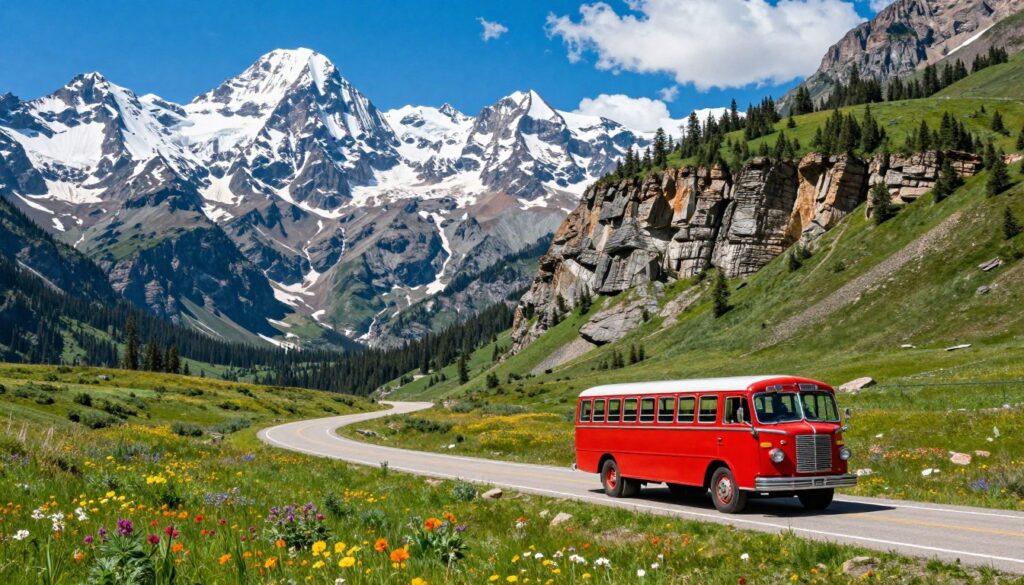
Straddling the Continental Divide in northern Montana, Glacier National Park preserves a million acres of pristine wilderness where glaciers still cling to mountain peaks and grizzly bears roam ancient forests. This rugged landscape of jagged peaks, turquoise lakes, and alpine meadows represents one of the most intact ecosystems remaining in the lower 48 states.
The park’s 26 remaining glaciers, down from 150 in the mid-1800s, provide stark evidence of climate change while continuing to sculpt the landscape. Over 700 miles of trails provide access to remote backcountry, though the iconic Going-to-the-Sun Road allows visitors to experience dramatic alpine scenery without leaving their vehicles. Wildlife viewing opportunities rival anywhere in North America, with chances to spot mountain goats, bighorn sheep, elk, and both black and grizzly bears.
Must-See Attractions in Glacier
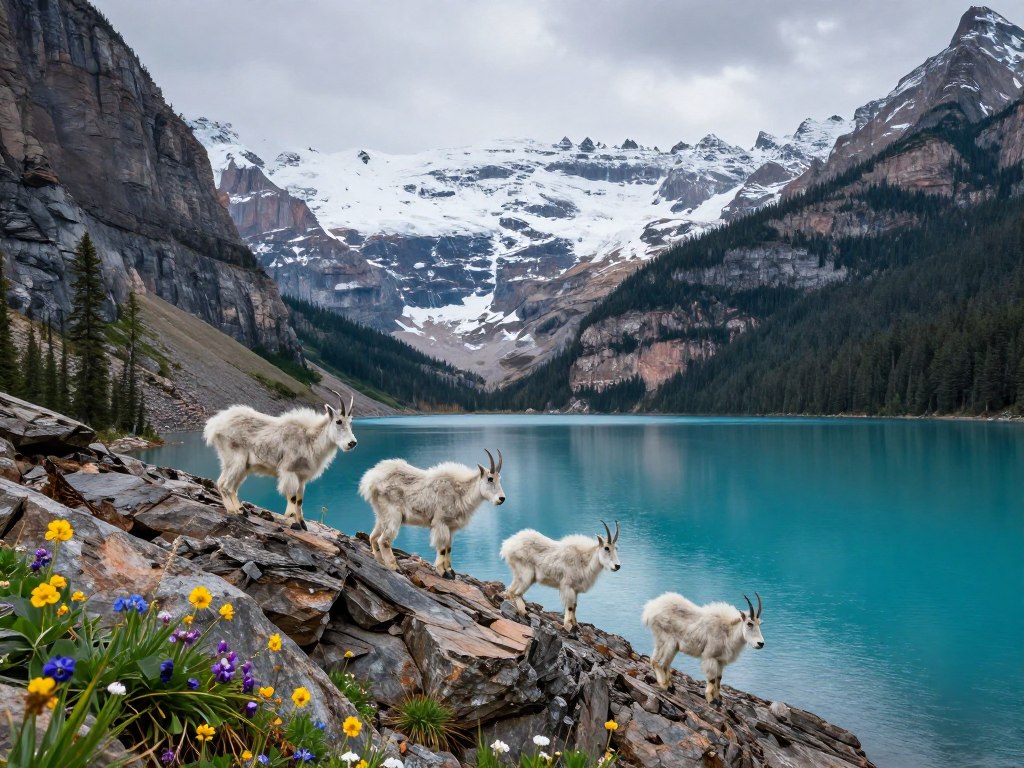
Going-to-the-Sun Road ranks among America’s most spectacular drives. This 50-mile engineering marvel crosses the Continental Divide at Logan Pass, climbing through habitats ranging from cedar forests to alpine tundra. The narrow road clings to cliff faces with dramatic drop-offs, offering views that change around every hairpin turn.
Logan Pass, at 6,646 feet, provides the highest point accessible by vehicle. Here, the Hidden Lake Overlook Trail offers a relatively easy 2.7-mile round trip hike through wildflower meadows to a viewpoint above a stunning alpine lake. Mountain goats frequently graze near the trail, seemingly unbothered by admirers.
Many Glacier Valley, accessible via the park’s northeast entrance, offers concentrated beauty often cited as the most spectacular area in the park. Multiple trails radiate from the historic Many Glacier Hotel, providing access to alpine lakes, waterfalls, and prime grizzly bear habitat.
Best Hiking Trails
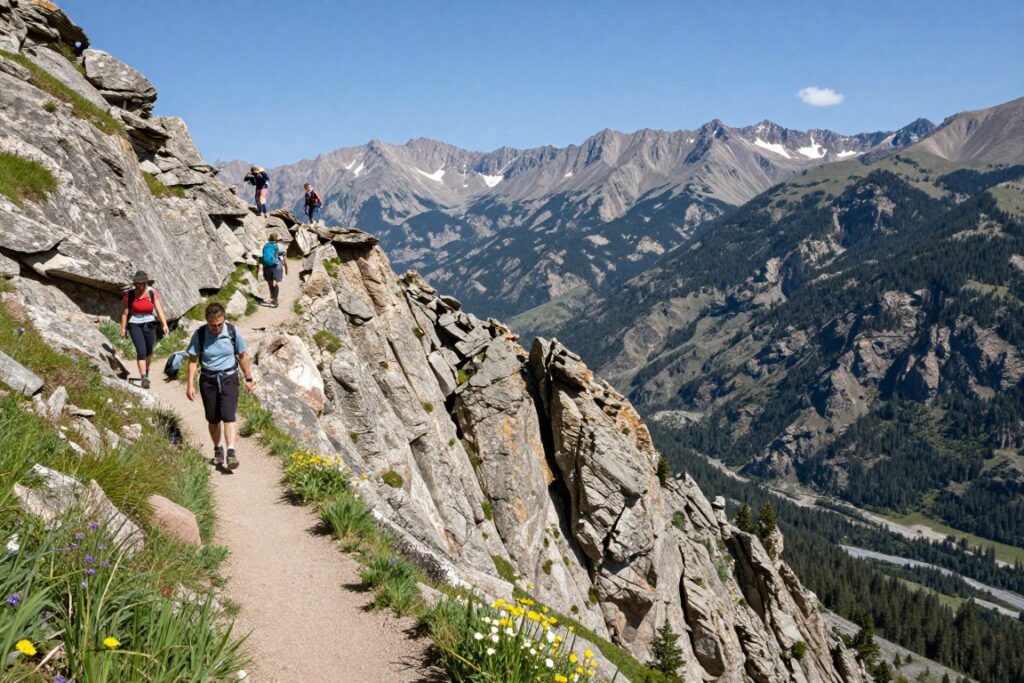
The Highline Trail delivers one of Glacier’s most spectacular hiking experiences. Starting at Logan Pass, this 11.8-mile trail follows a ledge blasted into the cliff face, with stunning views the entire distance. The trail eventually descends to the Granite Park Chalet, where hikers can stay overnight or return via the trail or loop route.
Grinnell Glacier Trail provides a 10.6-mile round trip journey to one of the park’s most accessible glaciers. The trail passes two turquoise lakes before climbing to viewpoints of the glacier itself, nestled in a dramatic cirque. July and August offer the best conditions, though the glacier continues to retreat noticeably each year.
Ideal Visiting Seasons
Late July through August offers the brief window when all park trails and the entire Going-to-the-Sun Road are typically snow-free. Wildflowers explode across alpine meadows, and long daylight hours allow extended hiking. However, this narrow season concentrates crowds, making accommodation reservations essential months in advance.
September provides an excellent alternative for visitors seeking solitude. Most trails remain accessible while crowds diminish significantly. Early fall colors begin appearing, especially at lower elevations, and wildlife becomes more active as animals prepare for winter. Morning temperatures drop below freezing, but afternoons remain pleasant.
Winter offers adventurous visitors a completely different park experience. While Going-to-the-Sun Road closes beyond the first few miles, cross-country skiing and snowshoeing provide peaceful ways to explore the snow-covered landscape. The park’s western valleys remain accessible, offering opportunities to track wolves and other winter-active wildlife.
Essential Gear for Mountain Adventures
Before exploring the towering peaks and challenging trails of these magnificent parks, ensure you have reliable equipment. These three essentials will enhance your safety and comfort on mountain adventures from the Tetons to Glacier.
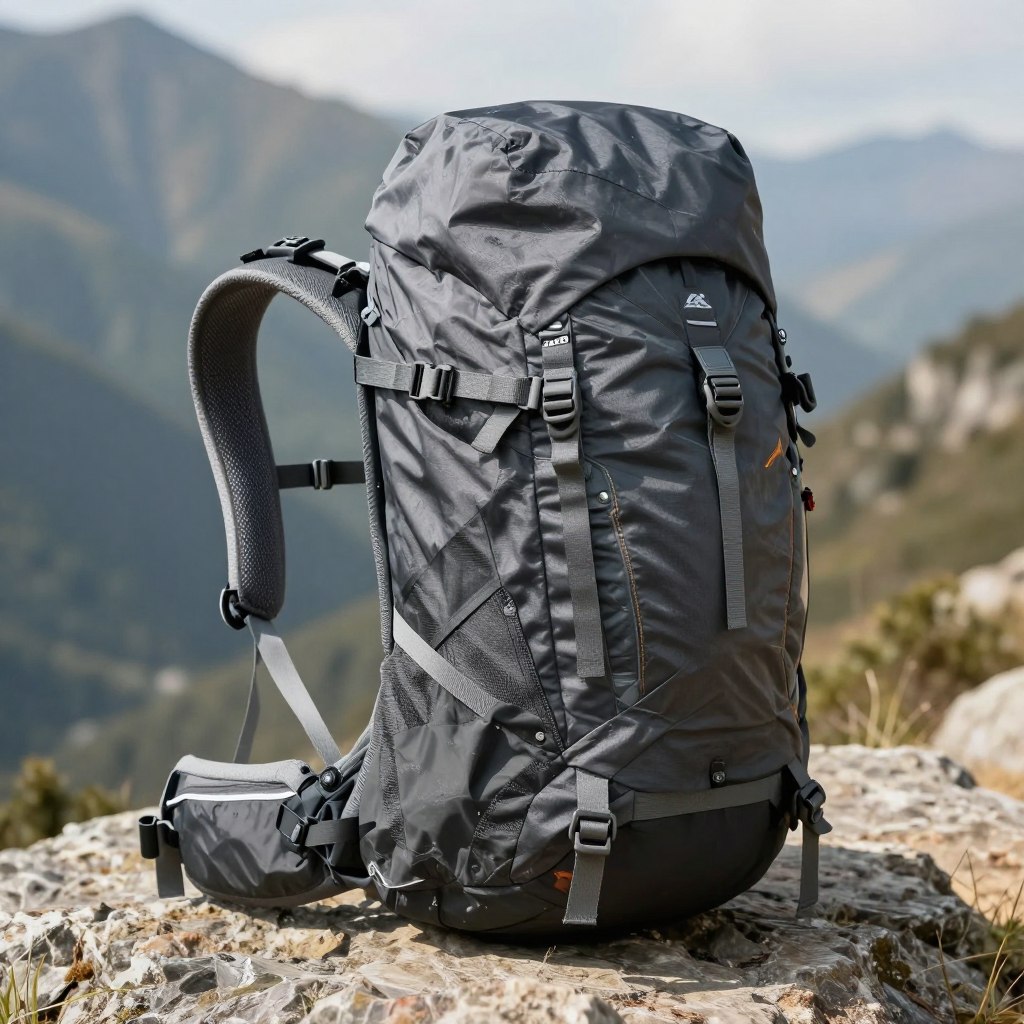
Osprey Atmos AG 65 Hiking Backpack
This premium backpack features Anti-Gravity suspension that distributes weight evenly across your hips and shoulders, making multi-day treks comfortable. The 65-liter capacity handles extended trips while remaining carry-on compliant when compressed. Ventilated back panel keeps you cool on steep climbs.
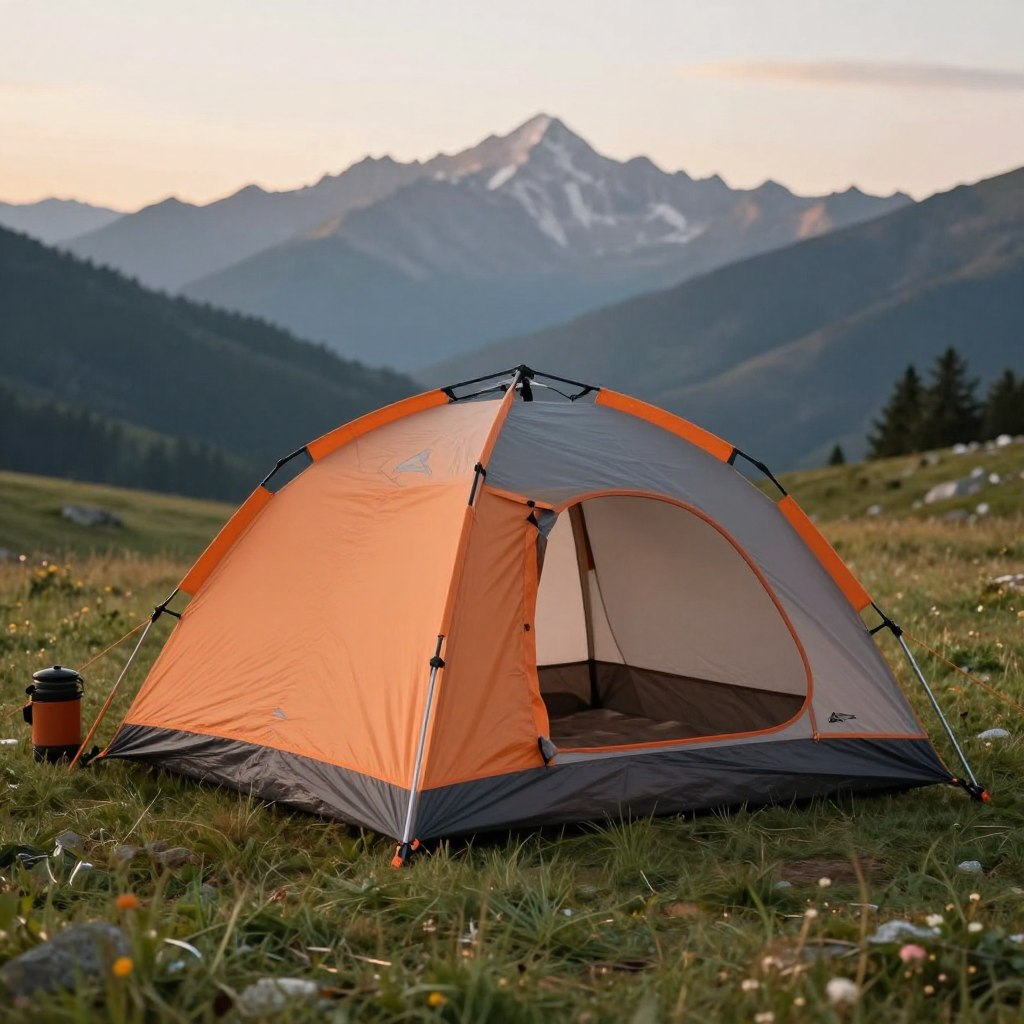
REI Co-op Half Dome 2 Plus Tent
Offering exceptional livability for its weight class, this tent provides 33 square feet of floor space and generous headroom. The two-door design with dual vestibules makes entry and gear storage convenient. Weather-tested construction withstands mountain storms while remaining lightweight at just 4 pounds 14 ounces.
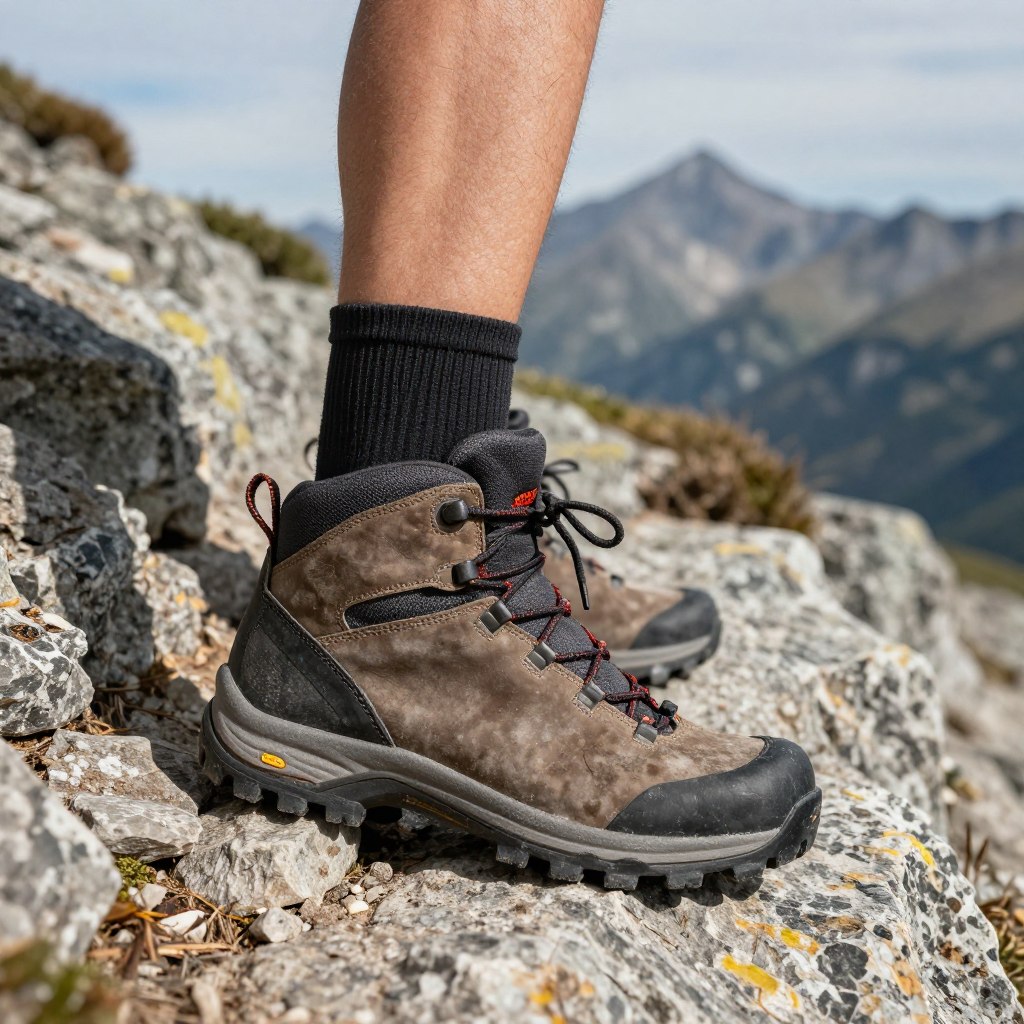
Salomon Quest 4 GTX Hiking Boots
These boots balance support and flexibility perfectly for varied mountain terrain. Gore-Tex waterproofing keeps feet dry through stream crossings and morning dew. The Contagrip sole provides confident traction on wet rocks and loose scree, while the supportive chassis protects ankles on rough trails.
Zion National Park: Red Rock Canyon Majesty
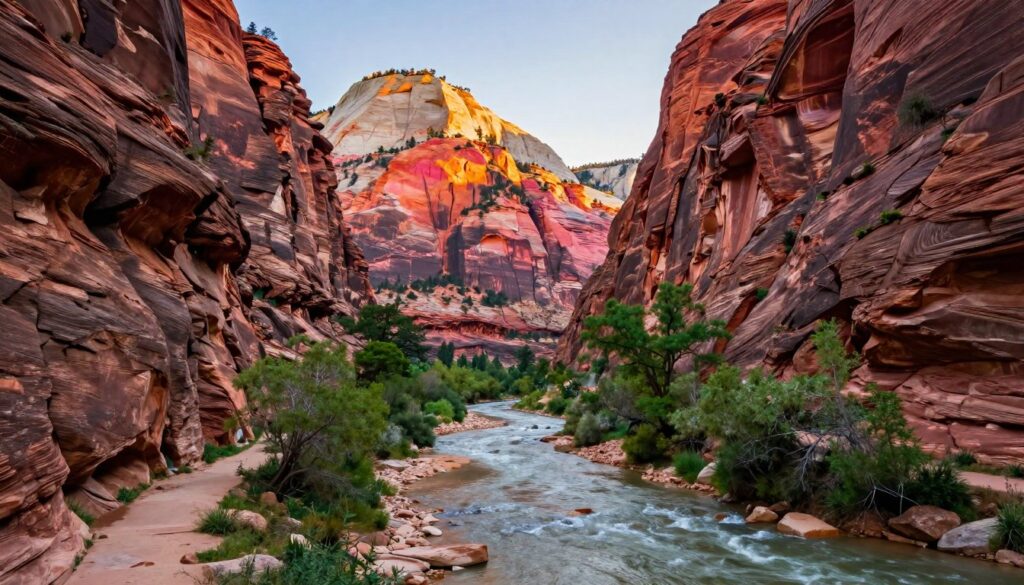
In southwestern Utah, the Virgin River has carved a canyon of such extraordinary beauty that early Mormon settlers named it after the biblical paradise. Zion National Park’s massive Navajo sandstone cliffs glow brilliant red, orange, and pink, rising up to 2,000 feet above the narrow canyon floor. These towering walls create one of the most dramatic landscapes in America’s national parks.
Covering 229 square miles, Zion showcases the intersection of three distinct ecological regions: the Colorado Plateau, Great Basin, and Mojave Desert. This convergence creates remarkable biodiversity, with ecosystems ranging from desert scrub to hanging gardens fed by seeping springs. The park’s slot canyons, including the famous Narrows, offer unique hiking experiences found nowhere else in the world.
Must-See Attractions in Zion
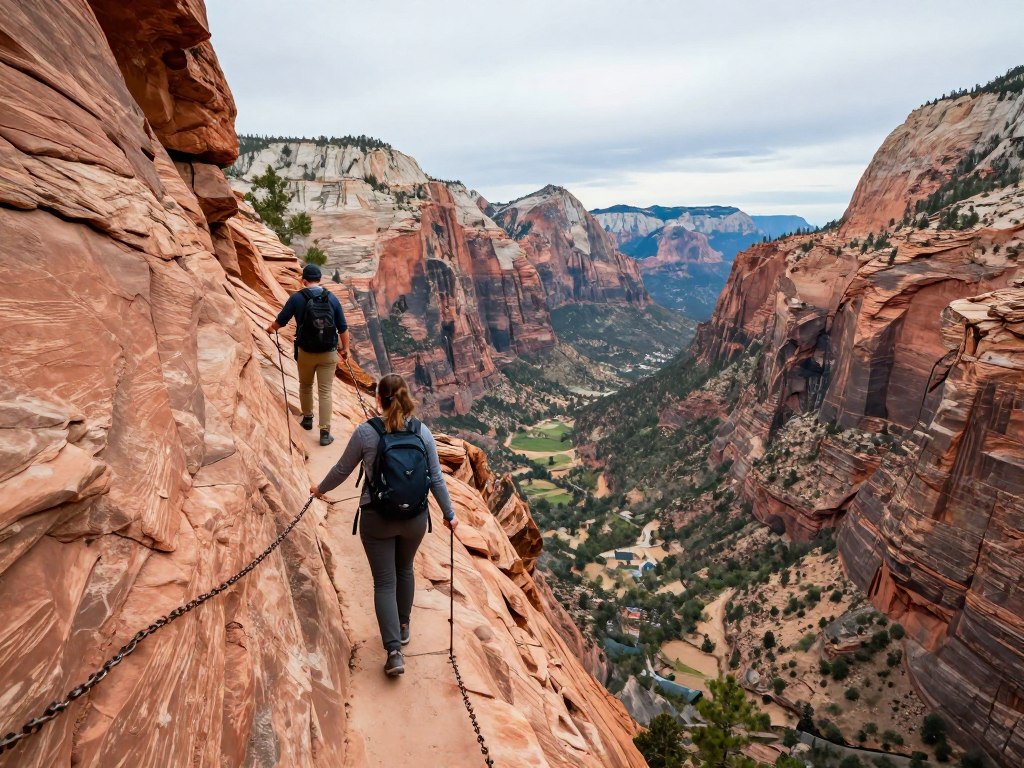
Angels Landing stands as Zion’s most iconic hike despite, or perhaps because of, its reputation for inducing vertigo. The final half-mile section follows a narrow rock spine with sheer drop-offs on both sides, chains bolted into the rock providing handholds. The 360-degree view from the summit reveals why this challenging hike attracts thousands despite requiring a competitive permit system.
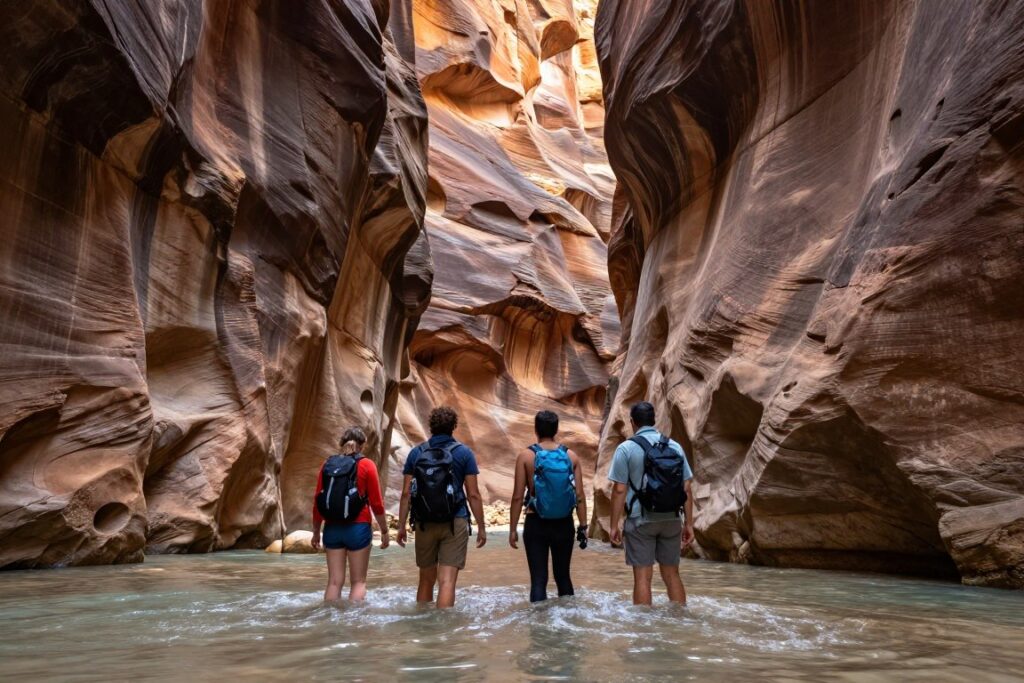
The Narrows takes hikers directly into the Virgin River as it flows between canyon walls rising 1,000 feet above. This 16-mile trail requires wading, and sometimes swimming, through the river itself. The canyon narrows to just 20 feet wide in places while walls tower overhead, creating a cathedral-like atmosphere unlike any other national park experience.
Court of the Patriarchs viewpoint showcases three massive peaks—Abraham, Isaac, and Jacob—rising above the valley. This easily accessible roadside stop provides magnificent views without requiring hiking, making it perfect for visitors with limited time or mobility.
Best Hiking Trails
The Observation Point Trail offers spectacular views that rival or exceed Angels Landing without the crowds or exposure. This strenuous 8-mile round trip gains 2,150 feet, climbing through a series of switchbacks before traversing Hidden Canyon and emerging at a viewpoint 2,150 feet above the valley. From here, Angels Landing appears diminutive far below.
The Emerald Pools Trails provide accessible options for families and casual hikers. The Lower Emerald Pool requires just 1.2 miles round trip to reach a waterfall-fed pool and hanging garden. Extending the hike to Middle and Upper Pools adds distance while maintaining moderate difficulty, with each pool offering its own distinct character and views.
Ideal Visiting Seasons
Spring, from March through May, brings moderate temperatures perfect for hiking before the intense desert heat arrives. Waterfalls flow vigorously with spring runoff, and desert wildflowers bloom across the canyon floor. However, the Virgin River’s high water levels during spring runoff can make Narrows hiking dangerous or impossible.
Fall, particularly September and October, offers Zion’s most comfortable weather. Summer’s oppressive heat subsides, deciduous trees along the Virgin River turn golden, and water levels in the Narrows drop to ideal conditions. Fall also sees reduced crowds compared to summer’s peak season, though weekends remain busy.
Winter transforms Zion into a peaceful retreat. While occasional snowfall dusts the high cliffs spectacularly, the canyon bottom rarely sees snow, allowing year-round hiking on most trails. Significantly reduced crowds and the warm afternoon sun make winter an increasingly popular season for those willing to accept shorter days and cold mornings.
Yellowstone National Park: Nature’s Thermal Wonderland
Established in 1872 as the world’s first national park, Yellowstone remains a crown jewel in America’s park system. Sitting atop a massive volcanic hotspot, this 2.2-million-acre wonderland showcases the planet’s most concentrated and diverse collection of geothermal features. Over 10,000 hydrothermal sites, including more than 500 geysers—two-thirds of the world’s total—create an otherworldly landscape of boiling pools, steaming vents, and erupting fountains.
Beyond its famous geothermal features, Yellowstone protects vast wilderness that serves as the core of the Greater Yellowstone Ecosystem, one of the last nearly intact temperate ecosystems on Earth. The park’s mountains, forests, and valleys support the largest concentration of mammals in the lower 48 states, including wolves, grizzly bears, bison, and elk.
Must-See Attractions in Yellowstone
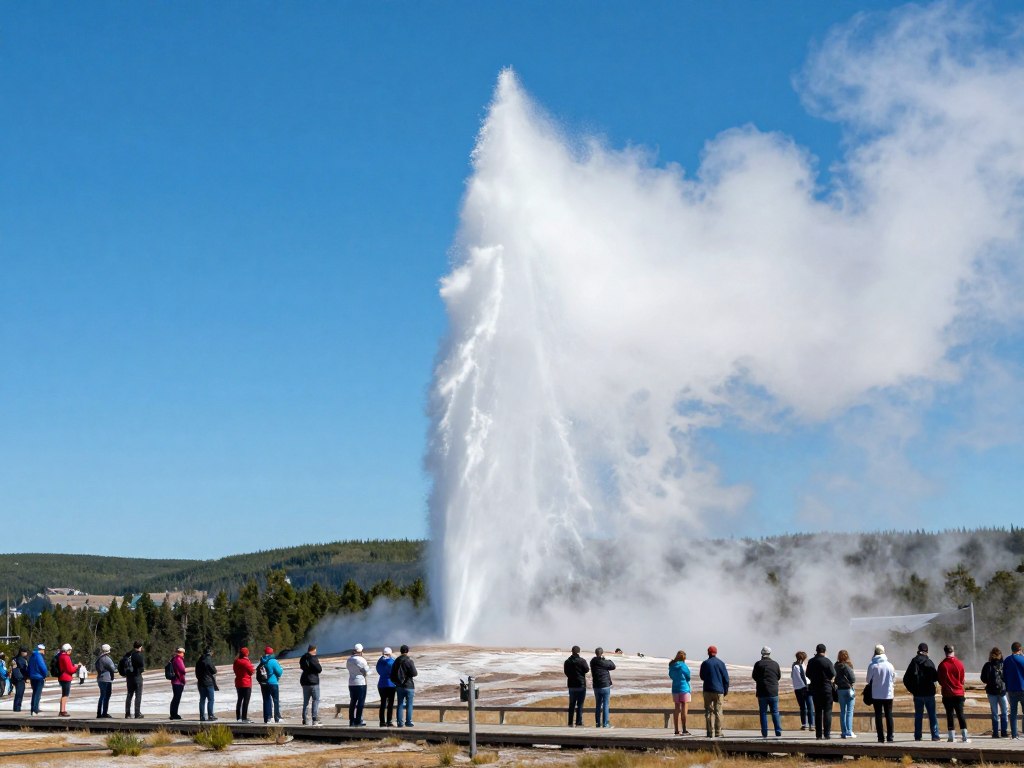
Old Faithful remains Yellowstone’s most famous attraction for good reason. While not the largest or most regular geyser in the park, it erupts approximately every 90 minutes, shooting 3,700-8,400 gallons of boiling water up to 185 feet high. The predictability allows visitors to plan their visit, while the sheer spectacle never fails to impress even frequent observers.
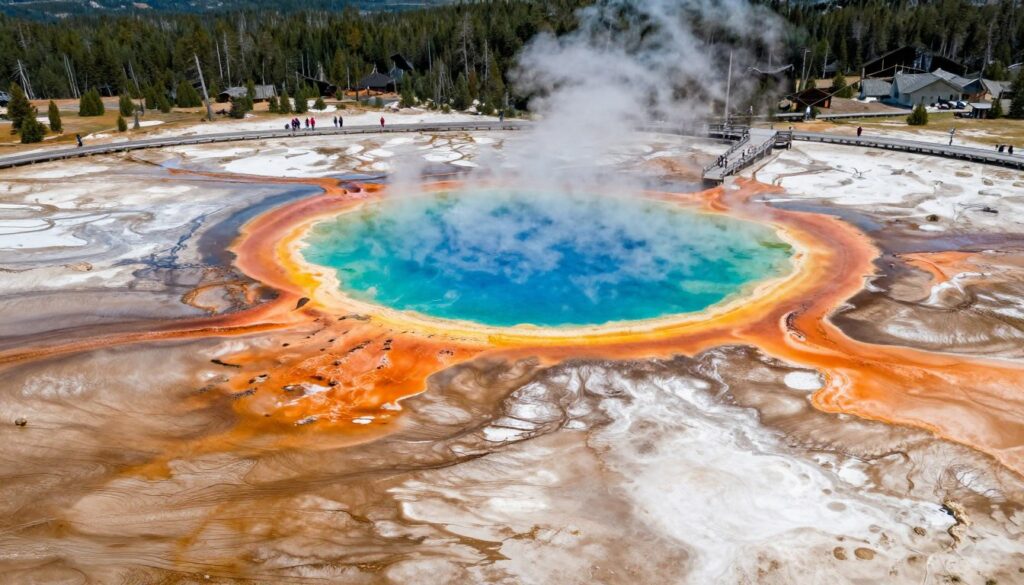
Grand Prismatic Spring dazzles visitors with its enormous size and vivid colors. At 370 feet in diameter, it ranks as the largest hot spring in the United States and third largest in the world. The brilliant rainbow of colors results from heat-loving bacteria and algae, with different species thriving at different temperatures, creating concentric rings of yellow, orange, and red surrounding the deep blue center.
The Grand Canyon of the Yellowstone showcases the power of water and thermal activity combined. The Yellowstone River plunges 308 feet over the Lower Falls before carving through yellow and orange-stained rock walls rising 1,200 feet high. Multiple viewpoints along both north and south rims offer varying perspectives on this spectacular canyon.
Best Hiking Trails
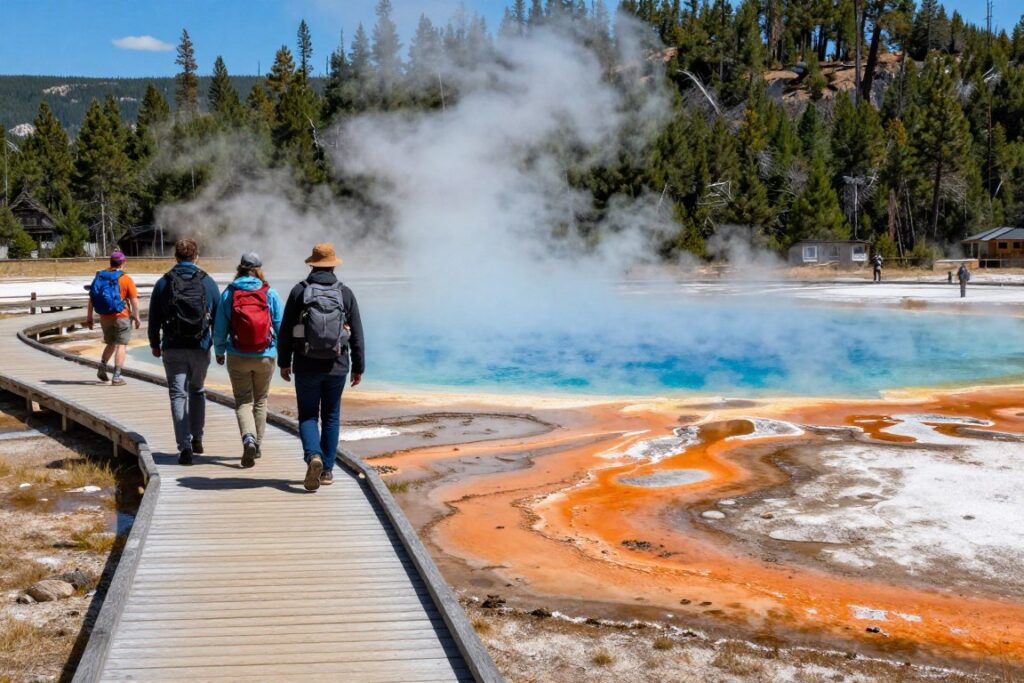
The Mount Washburn Trail provides a moderate 6.4-mile round trip hike to one of Yellowstone’s best viewpoints. The gradual climb gains 1,400 feet to the 10,243-foot summit, where panoramic views extend across the entire park. Bighorn sheep frequently graze the alpine slopes, and wildflowers carpet the meadows in July.
The Lone Star Geyser Trail follows an abandoned road along the Firehole River to an isolated geyser that erupts roughly every three hours. This relatively easy 4.8-mile round trip takes visitors away from crowded developed areas, offering peaceful forest scenery and the chance to witness an eruption without competing for viewing space.
Ideal Visiting Seasons
Late April through May brings spring to Yellowstone’s lower elevations while the high country remains snow-covered. This shoulder season offers the best wildlife viewing as newborn calves and cubs venture out, and animals concentrate near roads and thermal areas where early green-up provides forage. Crowds remain minimal, though many facilities haven’t yet opened for summer.
September through early October provides spectacular fall weather and colors. Aspen and cottonwood turn brilliant gold against evergreen forests, and cool weather makes hiking comfortable. The elk rut peaks in late September, when bull elk bugle across the valleys—one of nature’s most haunting sounds. Crowds diminish significantly after Labor Day despite excellent conditions.
Winter transforms Yellowstone into a white wilderness accessible primarily by snowcoach or snowmobile. The thermal features become even more dramatic as steam contrasts against snow and ice, and wildlife moves to geothermal areas for warmth. Wolf watching reaches its peak as packs’ dark forms show clearly against snowy backgrounds.
Grand Canyon National Park: Earth’s Greatest Geological Spectacle
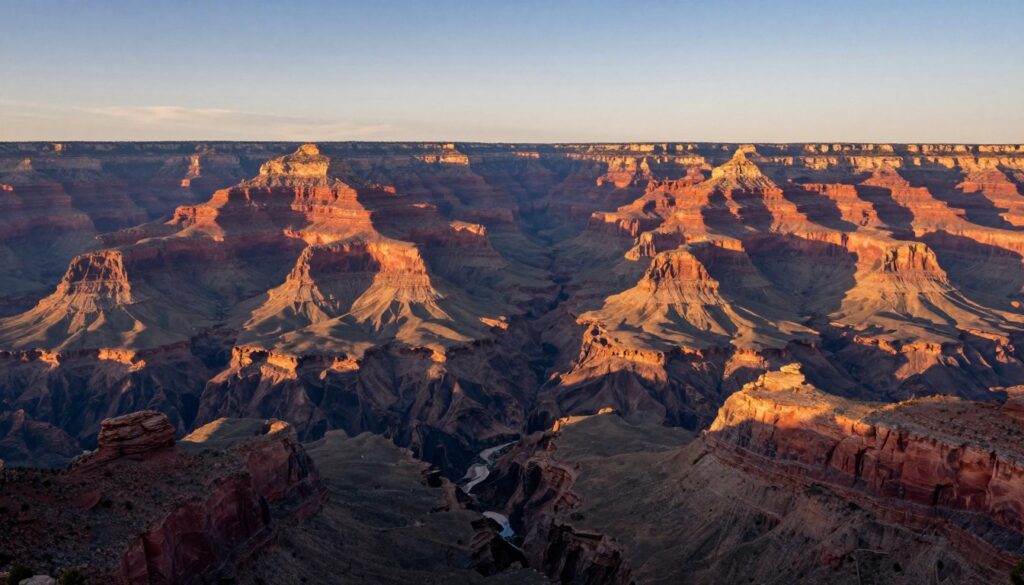
No photograph, description, or video can fully prepare first-time visitors for the overwhelming scale of the Grand Canyon. Stretching 277 miles long, up to 18 miles wide, and over a mile deep, this immense chasm exposes nearly two billion years of Earth’s geological history. The Colorado River, still actively carving the canyon deeper, appears as a thin ribbon from the rim viewpoints, though it rages 5,000 feet below.
Grand Canyon National Park protects 1,904 square miles of this natural wonder, making it larger than Rhode Island. The South Rim, accessible year-round, receives 90% of visitors, while the more remote North Rim offers a quieter experience with equally spectacular views. Below the rims, a network of trails descends into distinct ecosystems, from upper Sonoran desert to boreal forest conditions near the river.
Must-See Attractions in Grand Canyon
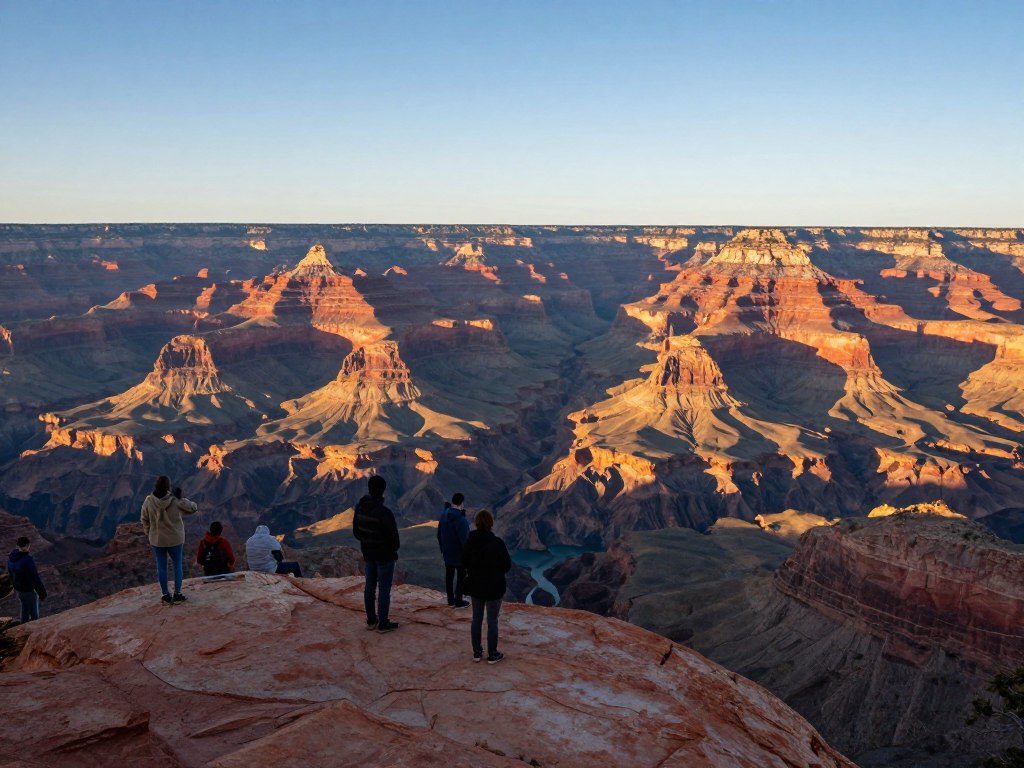
Mather Point provides most visitors their first view of the canyon and remains one of the most photographed locations in the park. Easily accessible from the South Rim’s main visitor area, this viewpoint offers expansive vistas down the canyon and across to the North Rim. Multiple viewing platforms accommodate crowds while providing safe viewing of the 1-mile drop.
Desert View Watchtower stands at the eastern end of the South Rim, offering panoramic views from the highest point on the rim. This 70-foot stone tower, designed by architect Mary Colter in 1932, blends Native American architectural influences with the surrounding landscape. The top floor provides 360-degree views, while interior murals depict Hopi legends.
The Colorado River itself, visible from various rim viewpoints as a thin line of water, remains the canyon’s creator and ongoing sculptor. Rafting trips ranging from half-day to three-week adventures allow visitors to experience the canyon from its depths, passing through rapids and camping on sandy beaches far from any road.
Best Hiking Trails
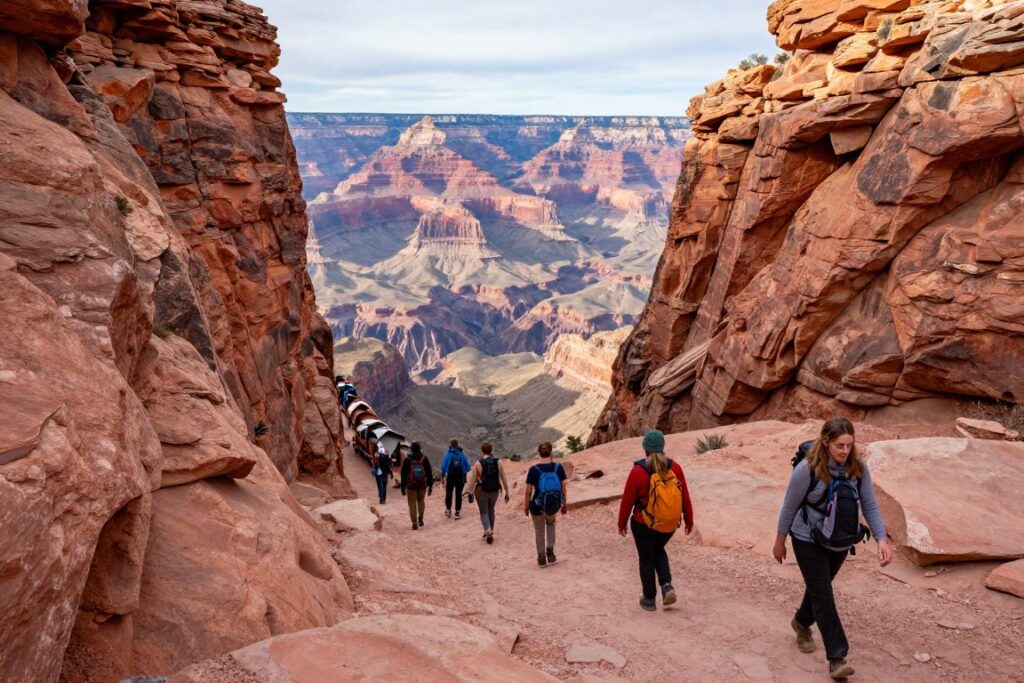
The Bright Angel Trail serves as the canyon’s most popular corridor trail, descending 9.5 miles from the South Rim to the Colorado River. Most day hikers turn around at one of the rest houses at 1.5 or 3 miles, gaining a taste of canyon depths without the grueling climb back from the bottom. The trail’s reliable water sources and established rest stops make it safer than many alternatives.
The Rim Trail follows the canyon edge for 13 miles, connecting multiple viewpoints along the South Rim. Paved sections make portions wheelchair-accessible, while the full distance provides a relatively easy way to experience changing perspectives on the canyon. Sunrise or sunset walks reveal the constantly shifting play of light and shadow across the layered rock faces.
Ideal Visiting Seasons
Spring, particularly April and May, brings moderate temperatures to the South Rim and sees wildflowers blooming in the inner canyon. Snow has typically cleared from rim trails while temperatures below remain comfortable for hiking. However, spring break crowds can make this season busy, especially around Easter and in May.
Fall, especially September and October, rivals spring as the ideal visiting season. Summer’s intense heat subsides both on the rim and below, making this prime time for multi-day backpacking trips. Fall colors appear in canyon vegetation, and wildlife becomes more active as animals prepare for winter. Crowds thin noticeably after Labor Day despite excellent weather.
Winter offers the most solitude on the South Rim, which remains open year-round. Snow occasionally dusts the rim, creating stunning contrasts against red rock, and visitors can experience the canyon without competing for space at viewpoints. The North Rim closes completely from mid-October through mid-May due to heavy snowfall.
Desert and Canyon Adventure Essentials
The desert landscapes of Zion, Yellowstone, and the Grand Canyon demand specialized gear that handles extreme heat, sudden weather changes, and challenging terrain. These three items will keep you comfortable and prepared for desert and canyon exploration.
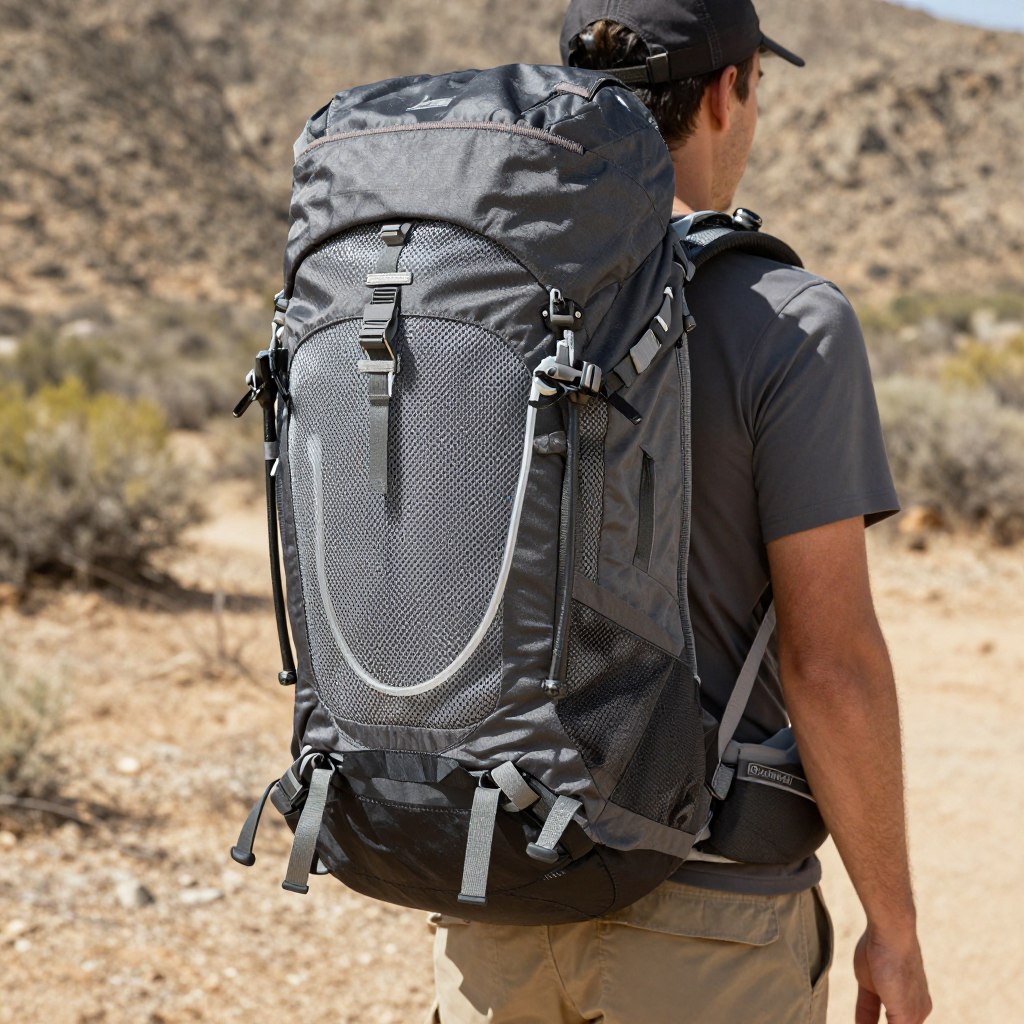
Gregory Zulu 55 Backpack
Designed specifically for hot weather hiking, this pack features a suspended mesh back panel that creates airflow between pack and body. The 55-liter capacity suits multi-day trips while the ventilated design prevents the sweaty back syndrome common in desert climates. Includes integrated rain cover and hydration reservoir compatibility.
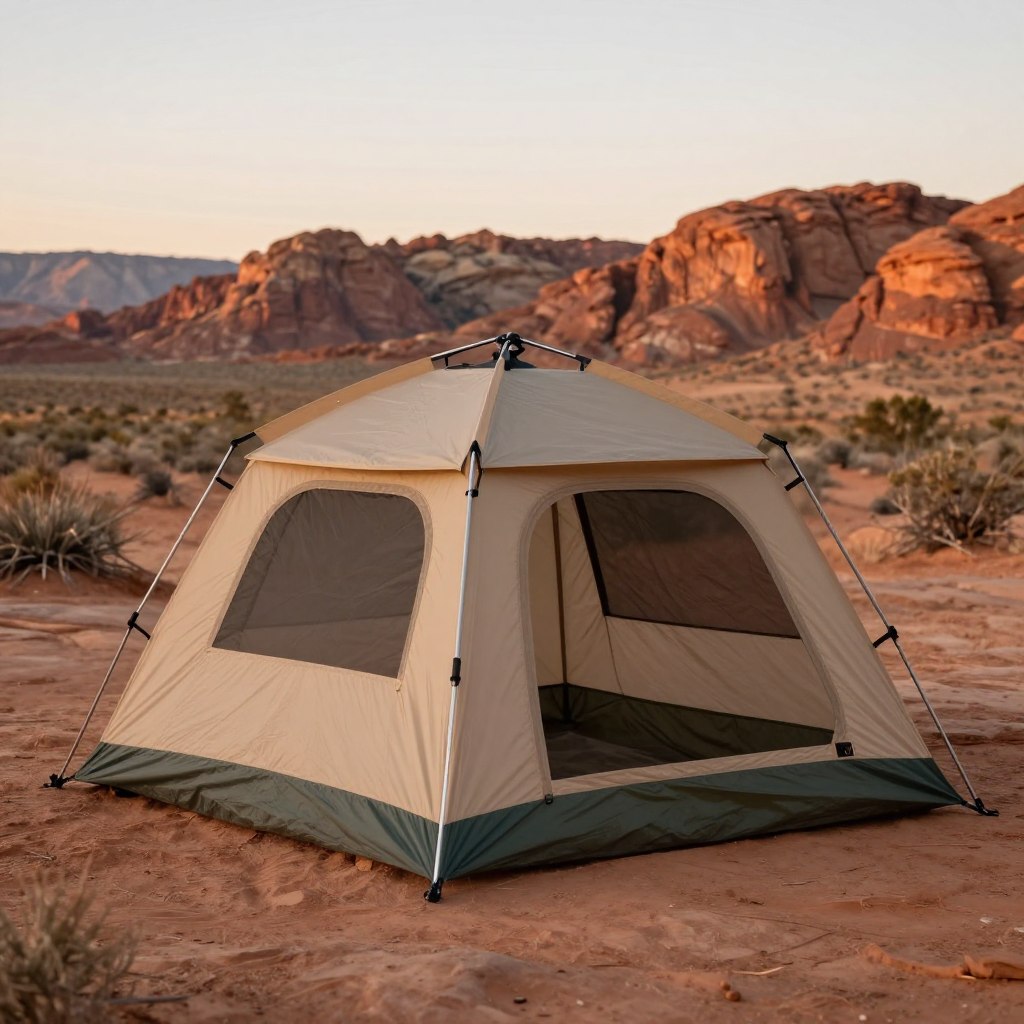
Big Agnes Copper Spur HV UL2 Tent
This ultralight tent weighs just 3 pounds yet provides generous living space and excellent ventilation crucial for desert camping. The high-volume design offers vertical walls for maximum usable space, while dual doors and vestibules make organization easy. Weather-resistant construction handles sudden desert thunderstorms.

Merrell Moab 3 Hiking Shoes
For hot weather hiking where ankle support isn’t critical, these low-cut hiking shoes provide superior breathability and flexibility. The Vibram sole grips slickrock confidently, while the breathable mesh upper keeps feet cooler than traditional boots. Quick-drying construction proves invaluable for creek crossings and slot canyon exploration.
Arches National Park: Stone Sculptures of the Desert
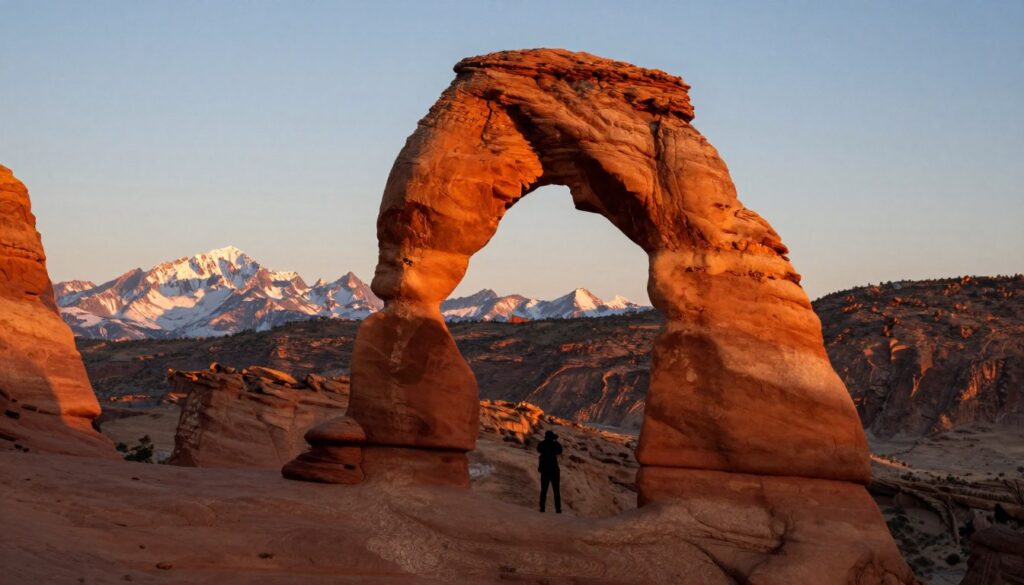
Nature has sculpted the sandstone of southeastern Utah into one of Earth’s most extraordinary landscapes. Arches National Park protects over 2,000 natural stone arches, along with countless pinnacles, balanced rocks, and soaring fins. These gravity-defying formations create a stone wonderland that seems more alien than earthly, particularly when illuminated by the low-angle light of sunrise or sunset.
The park’s 76,679 acres contain the world’s greatest concentration of natural arches, ranging from massive Landscape Arch, spanning 306 feet, to openings barely large enough to frame a view. The processes that created these arches—erosion, frost-wedging, and exfoliation—continue today, occasionally causing spectacular collapses that remind visitors of nature’s constant sculpting.
Must-See Attractions in Arches
Delicate Arch stands as Utah’s most iconic image, appearing on license plates and countless photographs. This freestanding arch, 52 feet tall with a 46-foot span, perches on the edge of a bowl-shaped canyon. The hike to reach it proves challenging but rewarding, and watching sunset illuminate the arch while the La Sal Mountains glow in the background creates an unforgettable experience.
Landscape Arch claims the title of world’s longest natural arch. This impossibly thin ribbon of stone spans 306 feet while measuring just 11 feet thick at its narrowest point. In 1991, a 60-foot slab fell from its underside, narrowing the arch further and highlighting the temporary nature of these formations. The easy hike to reach it makes viewing this record-holder accessible to most visitors.
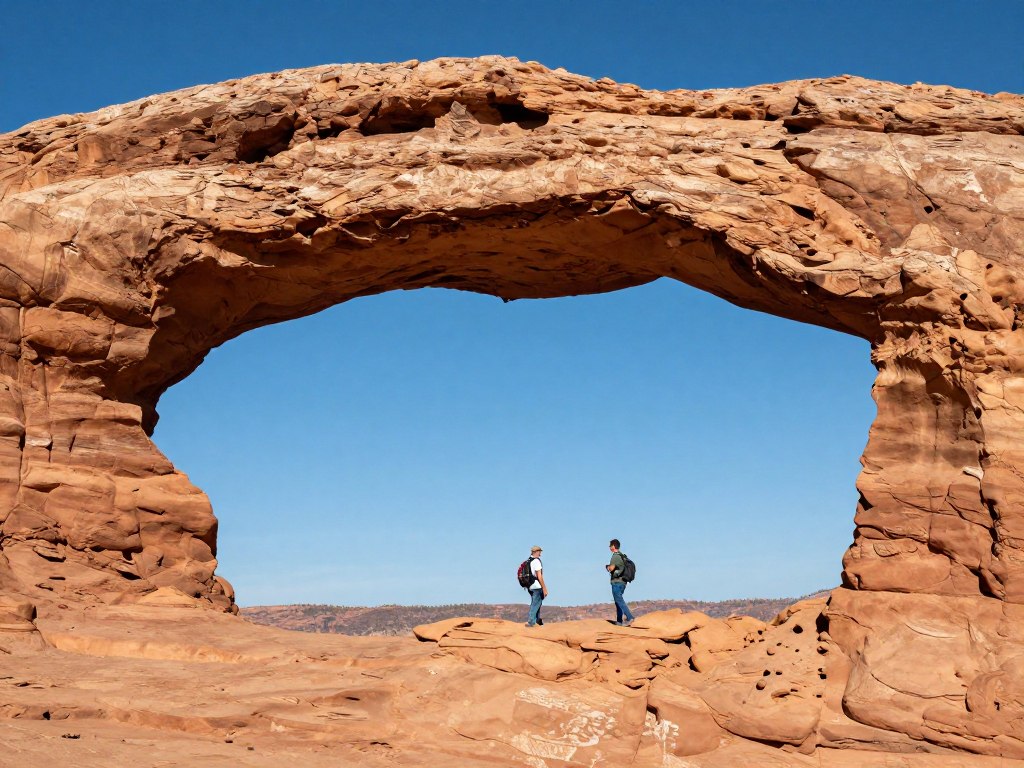
The Windows Section contains the park’s highest concentration of massive arches within a small area. North Window, South Window, and Turret Arch cluster together, allowing visitors to hike a short loop past all three. Double Arch, nearby, creates a dramatic formation where two arches share a common end.
Best Hiking Trails
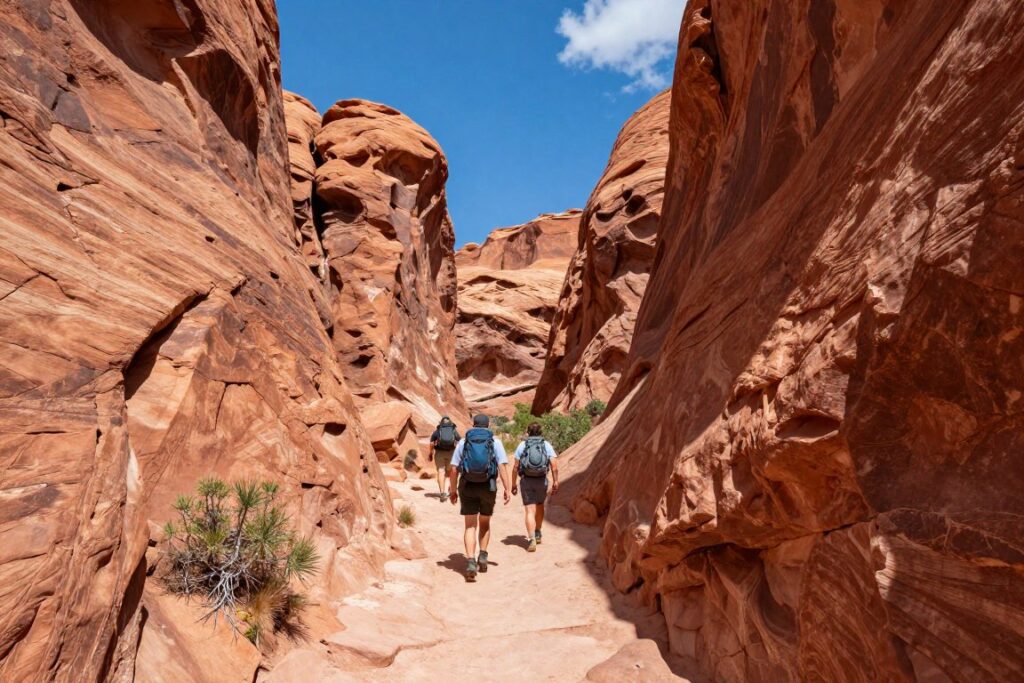
The Devils Garden Trail provides access to eight named arches along its 7.2-mile loop. The first section to Landscape Arch remains relatively easy, but the trail becomes increasingly challenging beyond, with narrow rock fins, steep slopes, and some scrambling required. Primitive sections of the trail offer solitude and adventure beyond the crowds concentrated near the trailhead.
The Delicate Arch Trail climbs 480 feet over 1.5 miles to reach its namesake arch. The trail crosses smooth slickrock with minimal shade, making early morning or late afternoon starts essential during hot months. The final approach traverses a narrow ledge with a sheer drop-off that intimidates those with height sensitivity, though the trail itself remains safe for careful hikers.
Ideal Visiting Seasons
Spring, from March through May, and fall, from September through November, provide the most comfortable weather for exploring Arches. Temperatures moderate between winter’s cold and summer’s extreme heat, making hiking pleasant. Wildflowers bloom in April and May, adding color to the red rock landscape. However, spring break and fall holidays bring significant crowds.
Summer’s intense heat makes midday hiking dangerous, with temperatures often exceeding 100°F and slickrock surfaces becoming scorching hot. Visitors who brave summer should limit hiking to early morning hours, starting hikes by 7 a.m. Afternoon thunderstorms, while providing dramatic skies for photography, can create dangerous conditions on exposed rock surfaces.
Winter offers the quietest time to visit, though nighttime temperatures drop below freezing and snow occasionally closes the park road temporarily. Clear winter days provide spectacular photography opportunities with snow-dusted arches against blue skies. The low sun angle of winter creates dramatic shadows that accentuate the formations’ three-dimensional nature.
Olympic National Park: Three Parks in One
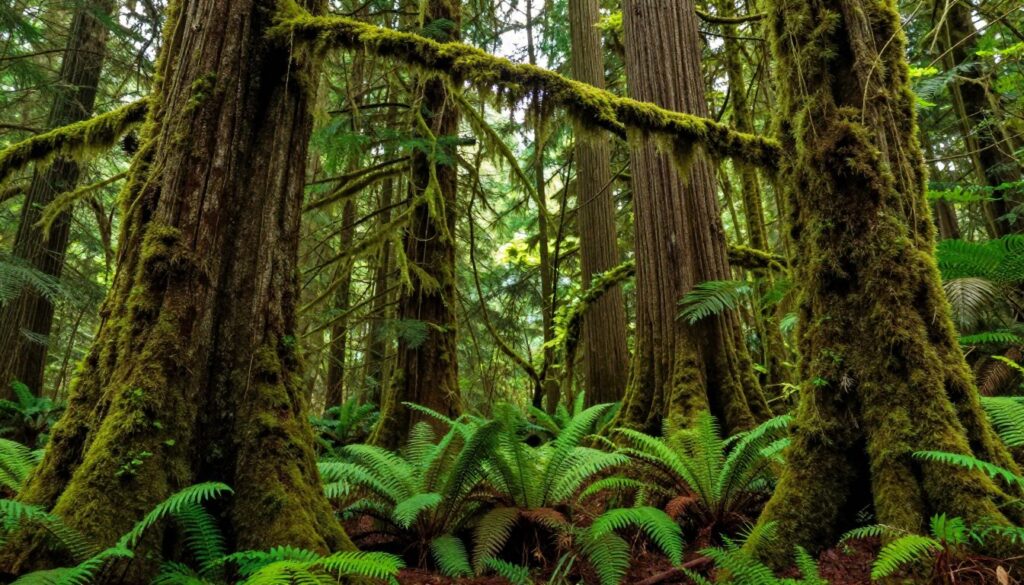
Olympic National Park showcases remarkable ecological diversity within its 922,000 acres. Encompassing glacier-capped mountains, temperate rainforests, and 73 miles of wild Pacific coastline, the park essentially protects three distinct ecosystems. This diversity results from the Olympic Peninsula’s unique geography, where mountains trap moisture from Pacific storms, creating one of the wettest places in the continental United States.
The park’s isolation has created unique evolutionary paths for several species found nowhere else on Earth. The Olympic marmot, Olympic snow mole, and several subspecies of plants exist only within the park’s boundaries. This biological isolation, combined with the ecological diversity, earned Olympic designation as both an International Biosphere Reserve and World Heritage Site.
Must-See Attractions in Olympic
The Hoh Rainforest represents one of the finest examples of temperate rainforest in North America. Massive Sitka spruce and western hemlock, some over 300 feet tall, create a cathedral-like canopy. Thick moss drapes every surface, giving the forest an otherworldly appearance. The Hall of Mosses Trail provides easy access to this enchanted landscape via a 0.8-mile loop.
Hurricane Ridge offers the most accessible mountain views in the park. This 5,242-foot ridgeline provides panoramic vistas of the Olympic Mountains’ glacier-clad peaks and, on clear days, views extending to Vancouver Island across the Strait of Juan de Fuca. The visitor center and easy trails make alpine scenery accessible even to those unable to backpack into the high country.
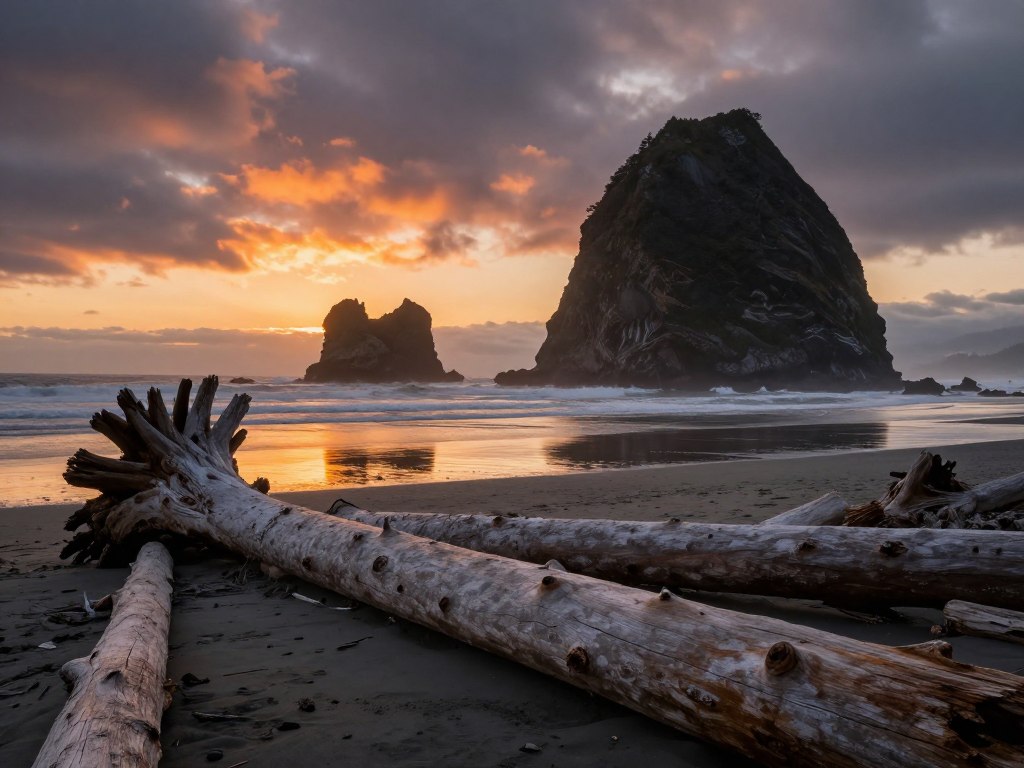
Ruby Beach exemplifies the park’s wild coastline with its dramatic sea stacks, tide pools teeming with marine life, and beaches strewn with massive driftwood logs. The ruby-tinted sand that gives the beach its name appears more orange or brown depending on moisture and light, but the dramatic seascape remains constantly spectacular.
Best Hiking Trails
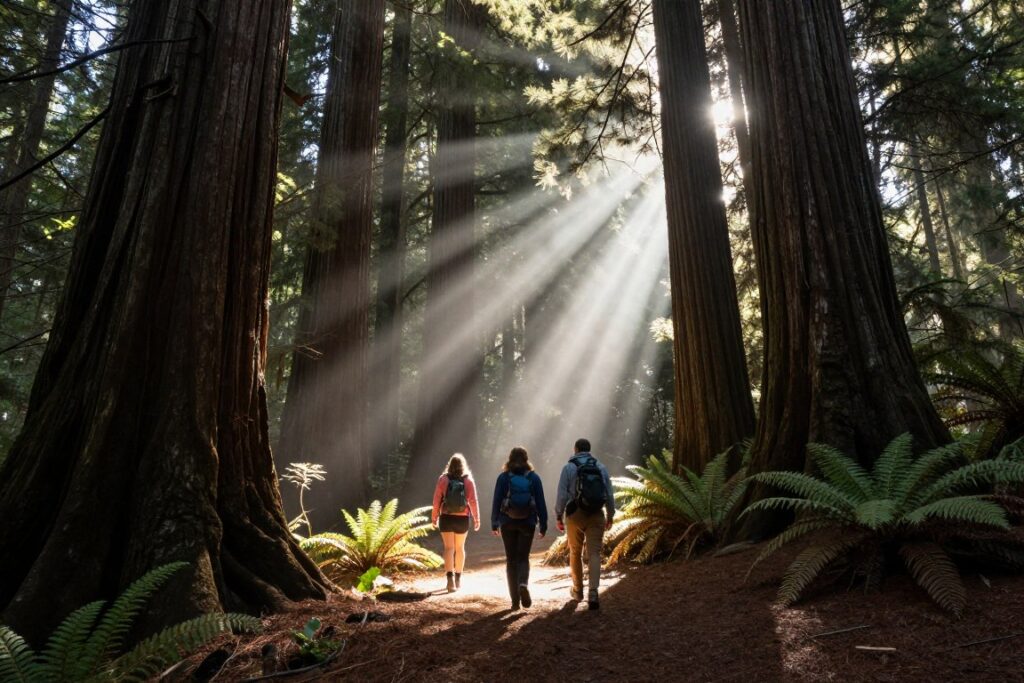
The Enchanted Valley Trail follows the Quinault River 13 miles into a glacier-carved valley surrounded by towering peaks. The relatively gentle grade makes this one of the park’s more accessible backcountry trips, though the distance requires an overnight stay. The Enchanted Valley Chalet, perched at trail’s end, provides a dramatic photographic subject framed by waterfalls cascading from surrounding cliffs.
The High Divide Loop creates a spectacular 18-mile circuit through the park’s alpine heart. The trail climbs to ridgelines offering views of Seven Lakes Basin below and Mount Olympus rising beyond. This challenging route requires two to three days and includes opportunities to spot Roosevelt elk herds that summer in these high meadows.
Ideal Visiting Seasons
Summer, from July through September, provides the only reliable dry weather on the Olympic Peninsula. Even during these months, the rainforest still receives significant precipitation, but trails dry out enough for comfortable hiking. Hurricane Ridge typically becomes snow-free by early July, opening high-country trails for a brief but glorious season.
Fall brings the return of heavy rains to the rainforest, but also spectacular storms along the coast. Beach hiking during fall storms allows visitors to witness the Pacific’s raw power safely from shore. The forests take on autumn colors subtly, with vine maples providing splashes of red and orange against the dominant evergreen backdrop.
Winter transforms the park into different worlds. The rainforest enters its peak growing season, with moss and ferns thriving in the constant moisture. Hurricane Ridge becomes a modest ski area, while the coastal section remains accessible and dramatic during winter storms. Visitors should embrace the wet weather rather than fighting it, as the rain creates the park’s defining character.
Rocky Mountain National Park: Alpine Splendor in Colorado
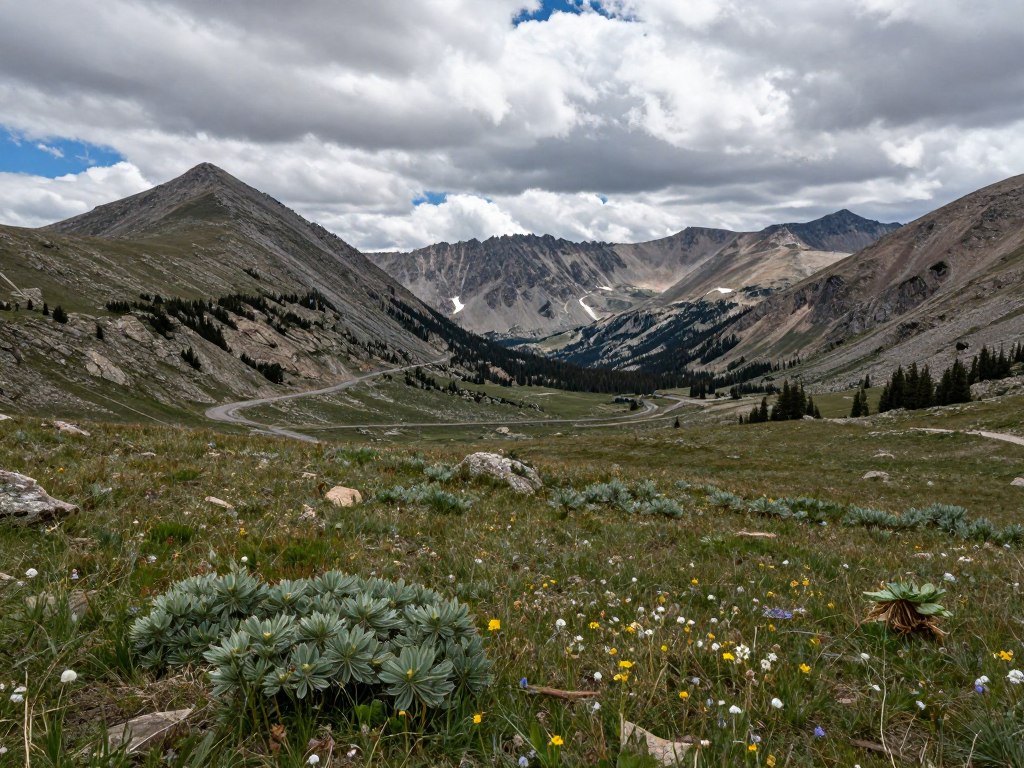
Straddling the Continental Divide in north-central Colorado, Rocky Mountain National Park protects 415 square miles of mountain wilderness. The park encompasses ecosystems ranging from montane forests to alpine tundra, with elevations spanning from 7,860 feet to 14,259 feet at the summit of Longs Peak. This vertical relief creates dramatic scenery and supports tremendous biodiversity within a relatively compact area.
Over 350 miles of trails provide access to crystalline alpine lakes, thundering waterfalls, wildflower-filled meadows, and windswept ridges above treeline. Trail Ridge Road, climbing to 12,183 feet, ranks as one of America’s highest paved roads and allows visitors to experience alpine tundra environments without leaving their vehicles. The park’s accessibility from Denver, just 90 minutes away, makes it one of the most visited mountain parks in the system.
Must-See Attractions in Rocky Mountain
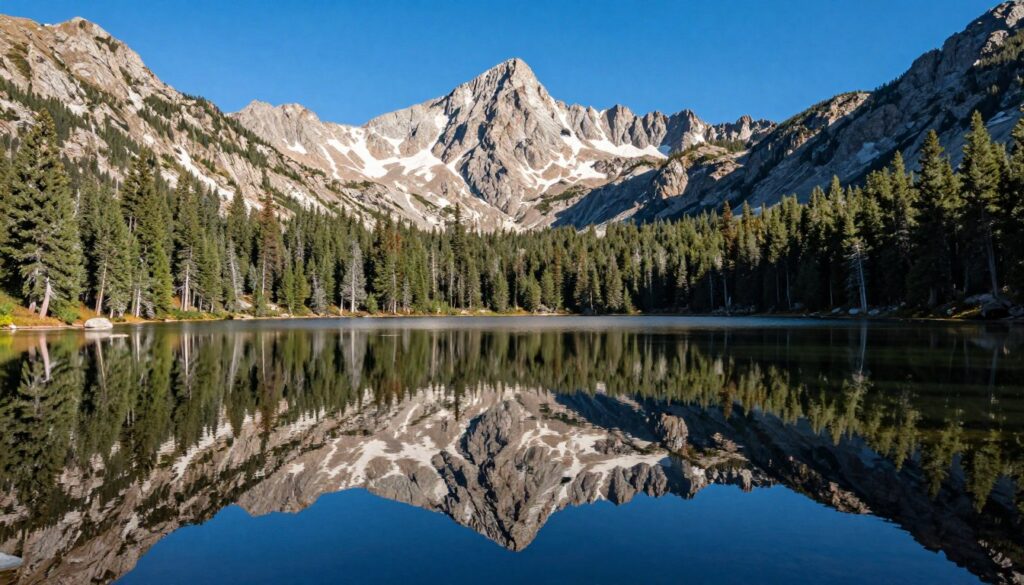
Bear Lake serves as the park’s most popular trailhead and photographic destination. This glacially-carved lake provides postcard-perfect reflections of Longs Peak and the Continental Divide. Multiple trails of varying difficulty radiate from the lake, and the easy 0.6-mile loop around its shoreline remains accessible to nearly all visitors.
Trail Ridge Road creates a spectacular 48-mile drive across the park. The road climbs above treeline for 11 miles, passing through alpine tundra that exists nowhere else so accessible by car in the United States. Numerous pullouts allow visitors to experience the thin air, expansive views, and fragile tundra ecosystem firsthand.
Alpine Visitor Center, perched at 11,796 feet, provides educational exhibits about the alpine tundra environment while offering panoramic views. The Lava Cliffs and Alpine Ridge Trails begin here, creating easy access to true alpine environments where plants hug the ground and wildlife has adapted to extreme conditions.
Best Hiking Trails
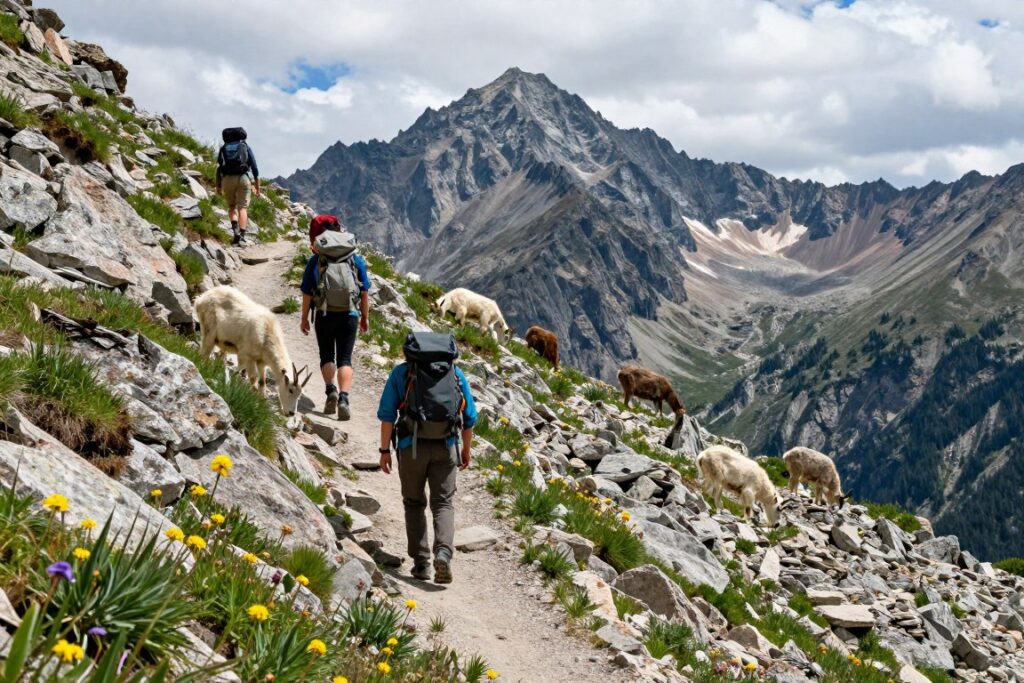
The Sky Pond Trail combines multiple attractions into a spectacular 8.5-mile round trip. The trail passes Alberta Falls, climbs past Loch Vale and Lake of Glass, before reaching Sky Pond nestled in a cirque beneath Taylor Peak. The final approach requires scrambling up water-smoothed rock beside Timberline Falls, adding adventure to the already stunning scenery.
Longs Peak, Colorado’s most prominent fourteener, attracts thousands of summit attempts annually. The 15-mile round trip gains over 5,000 feet and requires starting before dawn to avoid afternoon thunderstorms. While technically a hike rather than a climb in summer, the exposure and altitude make this a serious undertaking requiring preparation, fitness, and respect for changing weather.
Ideal Visiting Seasons
Summer, particularly July and August, brings the park to life with wildflowers carpeting meadows and all trails becoming snow-free. However, this brief season concentrates crowds, making parking at popular trailheads challenging by mid-morning. Afternoon thunderstorms develop regularly, requiring early starts for high-elevation hikes.
Fall, especially September through early October, offers spectacular alpine scenery with fewer crowds. Aspen groves turn brilliant gold, creating stunning contrasts against evergreen forests and gray rock faces. While higher trails may receive early season snow, lower elevation hikes remain accessible and the crisp air provides exceptional visibility for photography.
Winter transforms the park into a snowy wonderland accessible via snowshoes or cross-country skis. Bear Lake Road remains plowed, providing access to snow-covered trails and frozen waterfalls. The summer crowds disappear completely, and the landscape takes on a stark, pristine beauty. Wildlife viewing improves as elk descend to lower elevations and their tracks tell stories in fresh snow.
Great Smoky Mountains National Park: Ancient Mountains and Mist
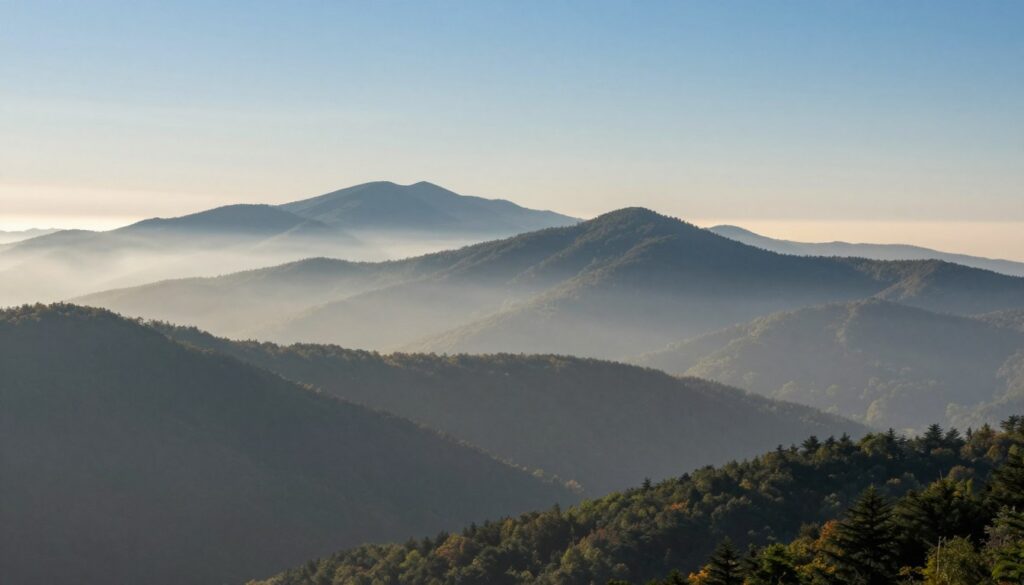
Straddling the Tennessee-North Carolina border, Great Smoky Mountains National Park protects America’s most visited national park. The distinctive blue haze that gives these mountains their name results from organic compounds released by the dense forests, creating an ethereal atmosphere that captivated early settlers and continues to enchant modern visitors.
These ancient mountains rank among the oldest on Earth, and their biological diversity exceeds most temperate regions. Over 19,000 documented species inhabit the park, with scientists estimating another 80,000 to 100,000 species await discovery. The park preserves the largest remnant of the diverse temperate forest ecosystem that once covered much of Eastern North America, including over 100 tree species and unparalleled wildflower displays.
Must-See Attractions in Great Smoky Mountains
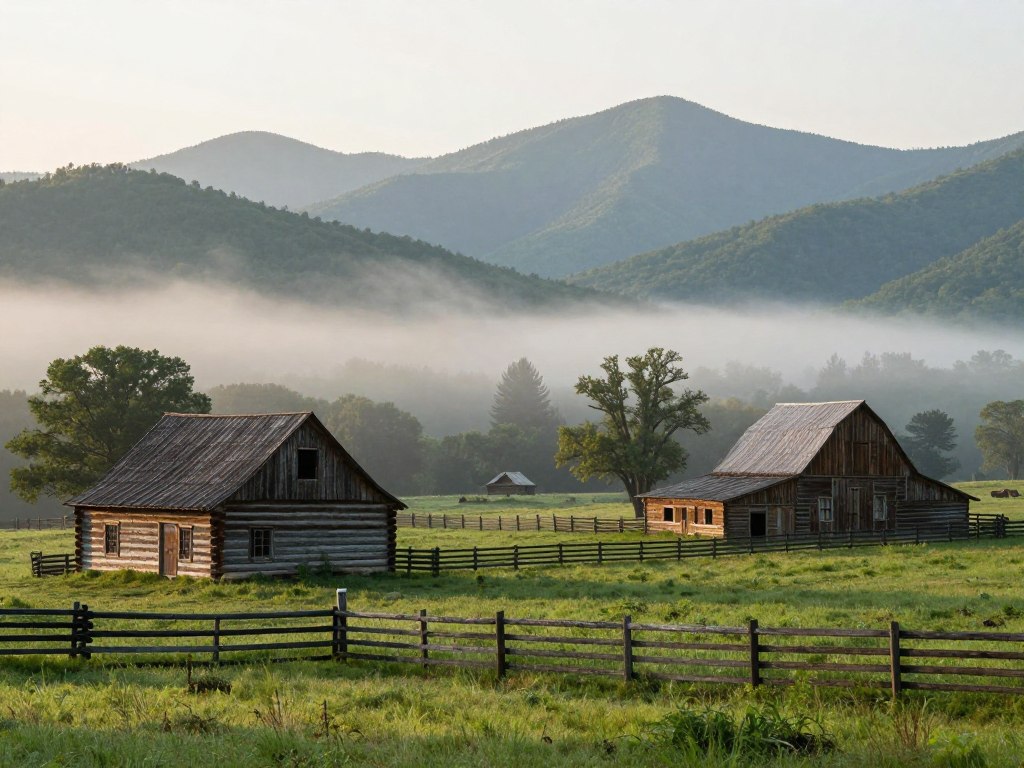
Cades Cove offers an 11-mile loop road through a broad valley surrounded by mountains. This picturesque cove contains well-preserved historic buildings including log cabins, barns, and churches that tell the story of mountain settlers. The loop provides the park’s best wildlife viewing, with black bears, white-tailed deer, and wild turkeys commonly spotted in the open meadows.
Clingmans Dome, at 6,643 feet, stands as the park’s highest point and third-highest peak east of the Mississippi. A steep half-mile paved trail leads to an observation tower providing 360-degree views across the mountains. On clear days, visibility can extend over 100 miles, though the famous “smoke” often limits views while creating ethereal atmospheric conditions.
Roaring Fork Motor Nature Trail winds through old-growth forest past waterfalls, historic buildings, and Roaring Fork creek. This narrow one-way road captures the essence of the Smokies’ lush forests and mountain streams. Several short trails branch from the drive, including access to Rainbow Falls, one of the park’s most spectacular waterfalls.
Best Hiking Trails
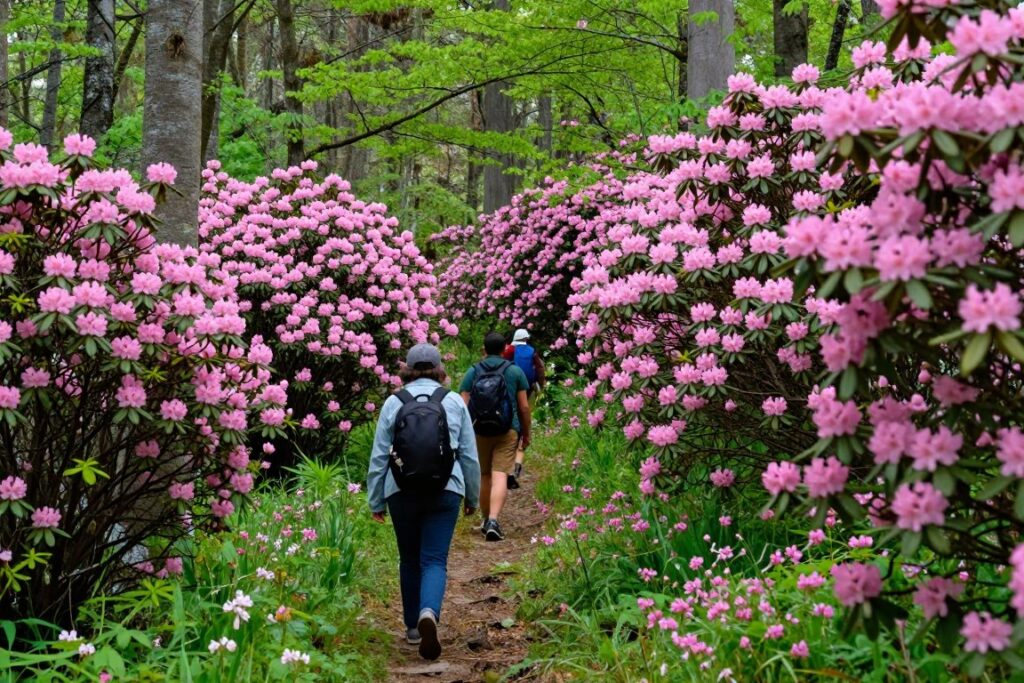
The Alum Cave Trail leads 4.4 miles to Mount LeConte’s summit, passing through diverse ecosystems and spectacular geological features. The trail climbs through old-growth forest, passes Arch Rock and Alum Cave Bluff, and emerges above treeline for the final summit push. The variety of scenery and manageable length make this the park’s most popular strenuous hike.
The Laurel Falls Trail provides a paved but steep 2.6-mile round trip to a picturesque two-tiered waterfall. The maintained trail makes this beautiful cascade accessible to most visitors, though the popularity creates parking challenges. Spring sees the trail’s namesake mountain laurel bloom in profusion, adding floral beauty to the waterfall’s appeal.
Ideal Visiting Seasons
Spring, from mid-April through May, brings the park’s famous wildflower displays. Over 1,500 flowering plant species bloom in succession, with different species peaking at different elevations. Spring beauty, trillium, violets, and countless others carpet the forest floor. However, spring rains occur frequently and can be heavy, making waterproofs essential.
Fall, especially mid-October, draws crowds for spectacular autumn colors. The park’s diverse trees create a prolonged color season, with different species turning at different times and elevations. The leaf-viewing season extends from late September through early November, with peak colors typically occurring around October 20th at mid-elevations.
Summer brings warm, humid weather with afternoon thunderstorms typical. Higher elevation trails provide relief from valley heat, and longer days allow extended hiking. Summer also offers the park’s famous synchronous fireflies display, when thousands of fireflies flash in unison during a two-week period in late May or early June.
Complete National Park Adventure Gear
After exploring these ten stunning national parks, you’ve discovered the incredible diversity of American landscapes. Whether you’re planning mountain adventures, desert expeditions, or forest explorations, having versatile, reliable gear enhances every experience. These final recommendations provide comprehensive solutions for any national park adventure.
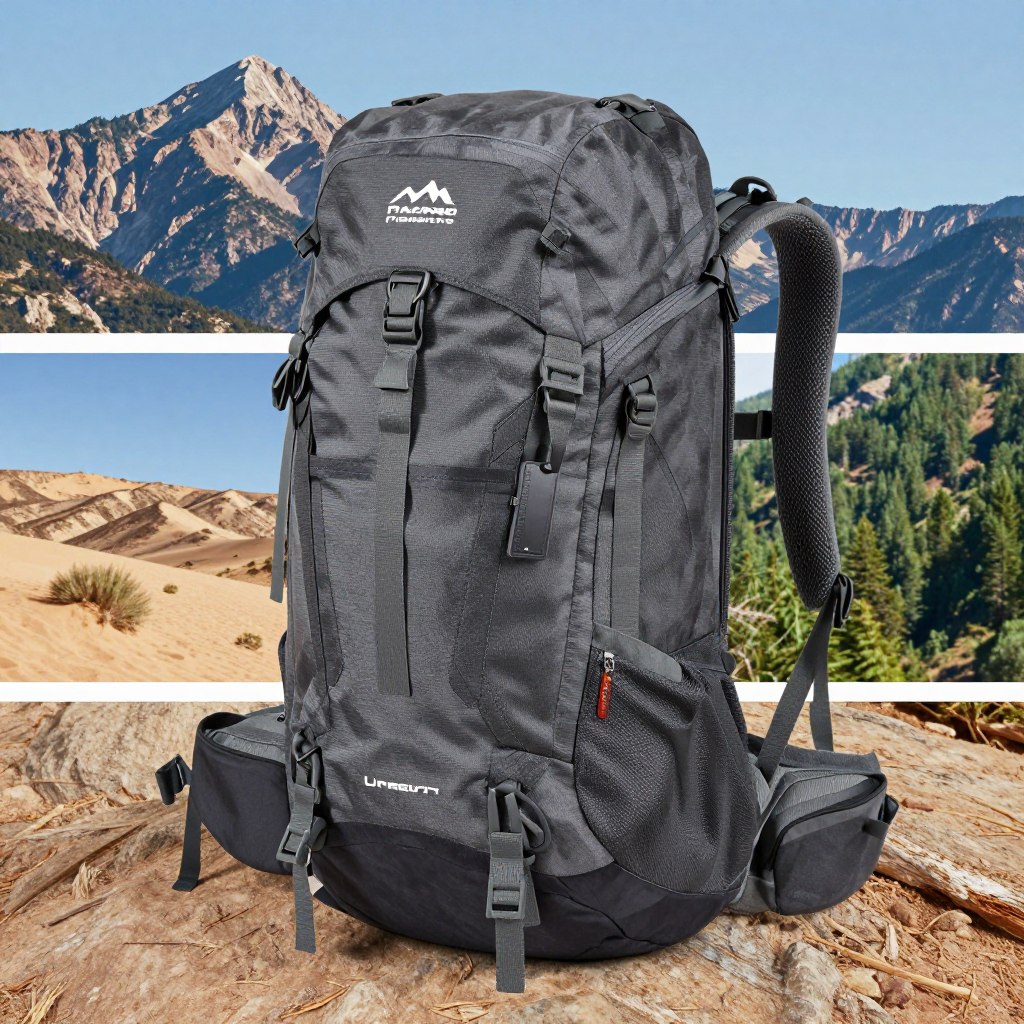
Osprey Atmos AG 65 Backpack
This versatile backpack excels in every environment featured in our guide. The Anti-Gravity suspension distributes weight comfortably whether you’re climbing mountain switchbacks or traversing desert canyons. Adjustable torso length accommodates different body types, while the raincover protects gear during Smoky Mountain storms. At 65 liters, it handles multi-day trips in any season.
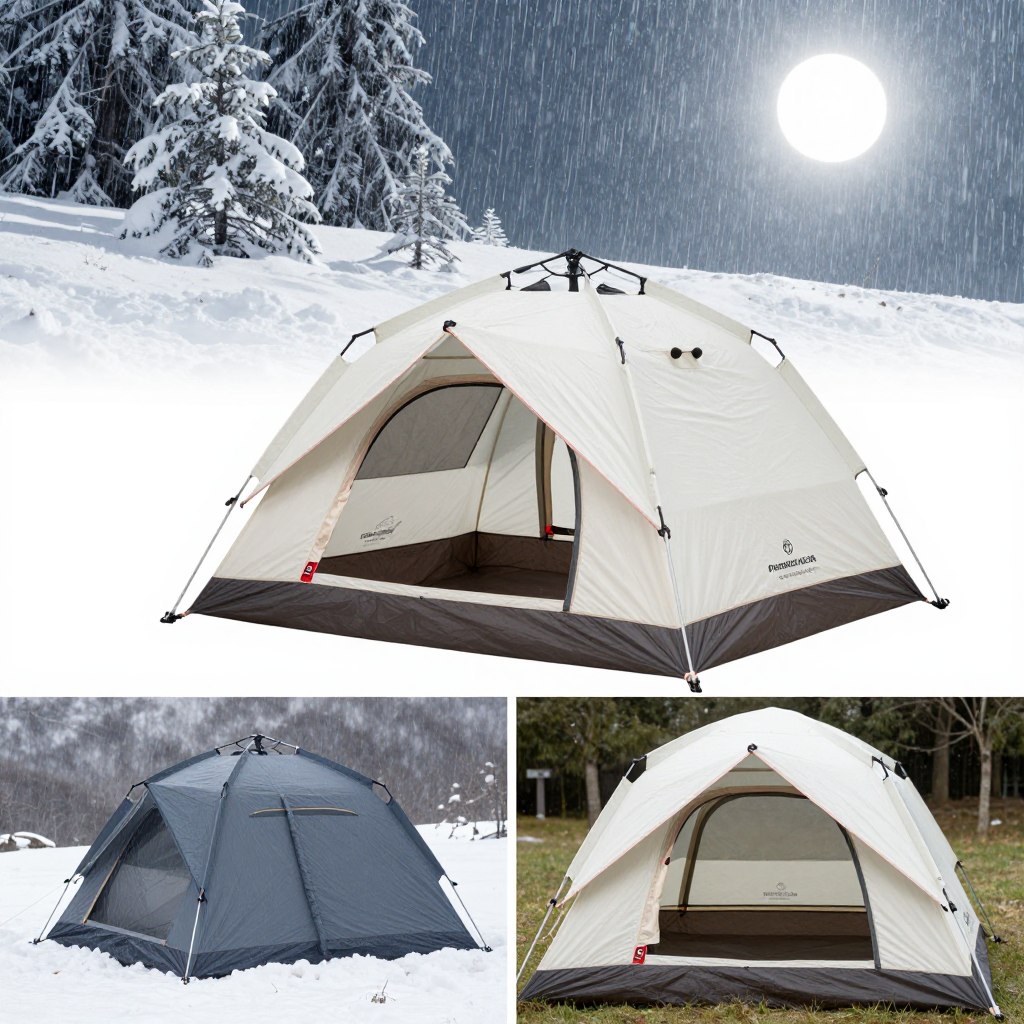
MSR Hubba Hubba NX 2-Person Tent
This award-winning tent balances weight, space, and weather protection perfectly for national park camping. The freestanding design pitches easily on any surface from Olympic’s beach sand to Rocky Mountain’s rocky terrain. Excellent ventilation prevents condensation in humid Smokies conditions while the robust rainfly handles surprise storms. Weighs just 3.5 pounds packed.
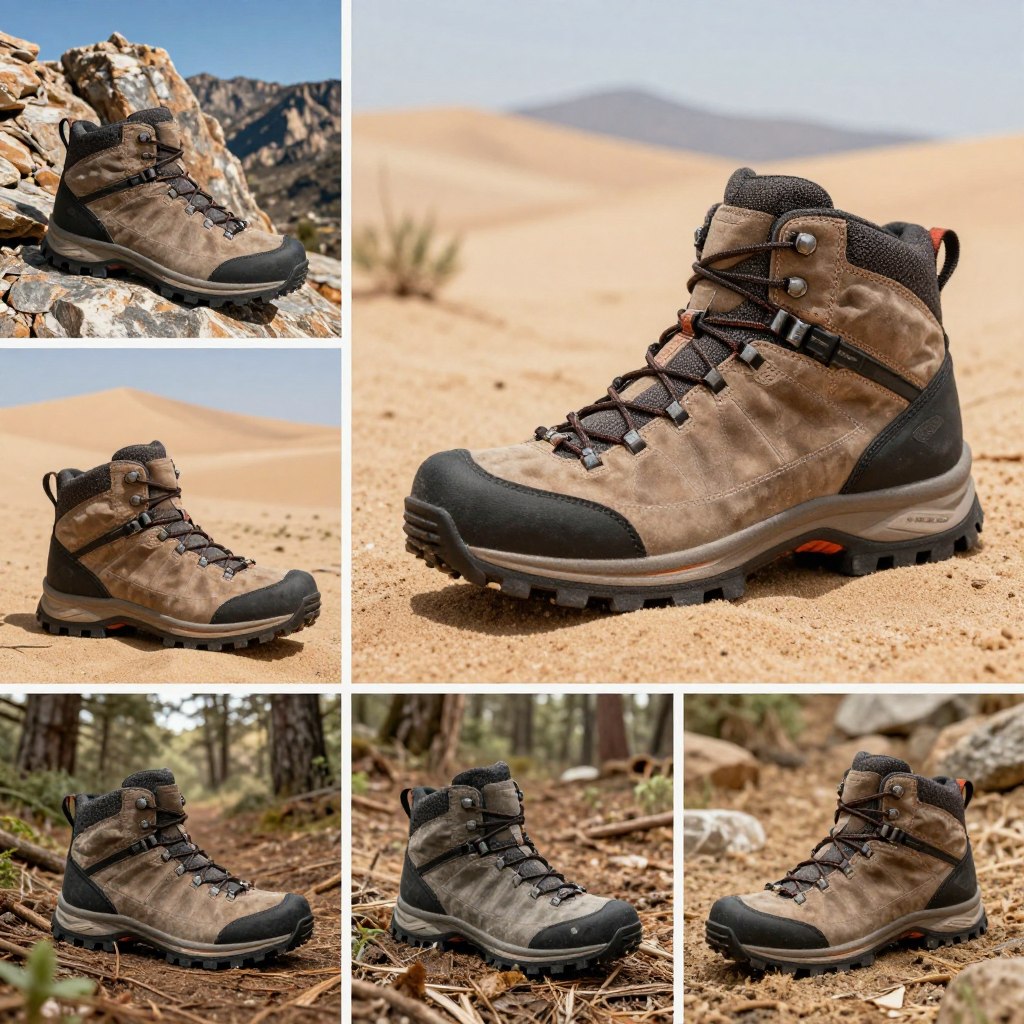
Salomon X Ultra 4 Mid GTX Boots
These boots prove themselves across every terrain in America’s most stunning national parks. The mid-height design provides ankle support for Grand Teton’s rocky trails while remaining nimble enough for Arches’ slickrock. Gore-Tex waterproofing keeps feet dry crossing Olympic’s streams or hiking through Yellowstone’s thermal areas. The Contagrip sole grips confidently on wet or dry surfaces.
Pro Tip: Before committing to expensive gear purchases, consider renting equipment for your first few national park trips. Many outdoor retailers and local shops near major parks offer rental programs that let you test different brands and styles. This hands-on experience helps you make informed decisions when you’re ready to invest in your own gear.
Planning Your National Park Adventure
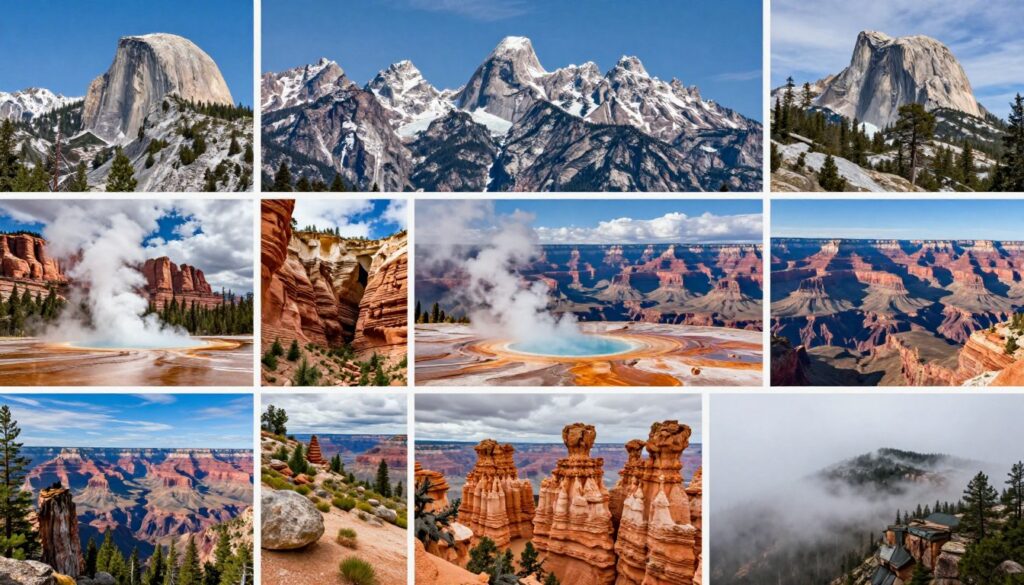
America’s most stunning national parks represent the nation’s greatest natural treasures. From the towering peaks of Grand Teton to the ancient forests of the Great Smoky Mountains, from the thermal wonders of Yellowstone to the red rock masterpieces of Zion and Arches, these protected landscapes showcase nature’s infinite creativity and power.
Each park offers unique experiences that cannot be replicated elsewhere. The granite monoliths of Yosemite inspire awe in ways fundamentally different from the vast chasm of the Grand Canyon. The misty rainforests of Olympic create environments utterly unlike the alpine tundra of Rocky Mountain. This diversity ensures that every park visit brings new discoveries, perspectives, and memories.
As you plan your adventures to these remarkable places, remember that responsible visitation preserves these landscapes for future generations. Follow Leave No Trace principles, stay on designated trails, properly store food away from wildlife, and pack out everything you bring in. Support the National Park Service through entry fees, donations, and volunteer work. Consider visiting during shoulder seasons when crowds thin but scenery remains spectacular.
The best time to visit America’s national parks is now. These protected landscapes face challenges from climate change, increased visitation, and funding constraints. Your visits, properly executed, support their preservation while creating memories that last a lifetime. Whether you seek adventure on challenging trails, peaceful contemplation at scenic viewpoints, or educational experiences exploring natural and human history, these ten stunning national parks deliver beyond expectations.
Start planning your journey today. Research specific parks that match your interests and abilities. Make reservations early, especially for popular campgrounds and lodging. Invest in quality gear that enhances comfort and safety. Most importantly, approach these landscapes with respect, curiosity, and openness to experiences that will change your perspective on the natural world.
America’s most stunning national parks await your discovery. The mountains, canyons, forests, and geological wonders protected within their boundaries represent America at its most beautiful and inspiring. Your adventure begins the moment you decide to go.